

Download the audio
Slide 1. Introduction.
The class develops what silent blocks-bushings are, their functions, their maintenance, and their implications for fleet management.
Slide 2. Silent blocks in vehicles.
- What are silent blocks?.
Silent blocks are essential components for ensuring driving comfort, as well as improving vehicle safety and efficiency. They help reduce wear on vital parts, enhance the vehicle’s balance and responsiveness, and are key to ensuring an optimal driving experience.
Understanding the function and importance of silent blocks not only helps optimize driving comfort and safety but also facilitates more efficient vehicle maintenance management. With proper maintenance and regular inspections, silent blocks will ensure optimal performance, leading to pleasant and safe journeys. It is crucial not to underestimate their impact; these components are more than just noise-reduction devices—they are fundamental to ensuring vehicle stability and driving efficiency.
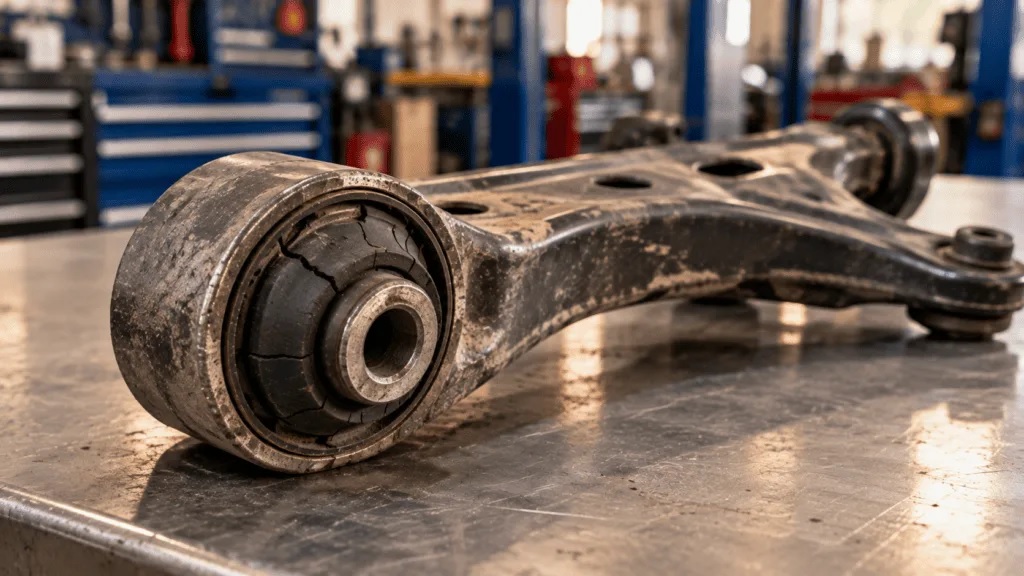
Silent blocks—also known as "metal-rubber joints"—are essential components of a vehicle's suspension system. Consisting of two metal sleeves with a rubber or plastic insert between them, they play a vital role in controlling movement and reducing vibrations and noise transmitted through the vehicle's chassis.
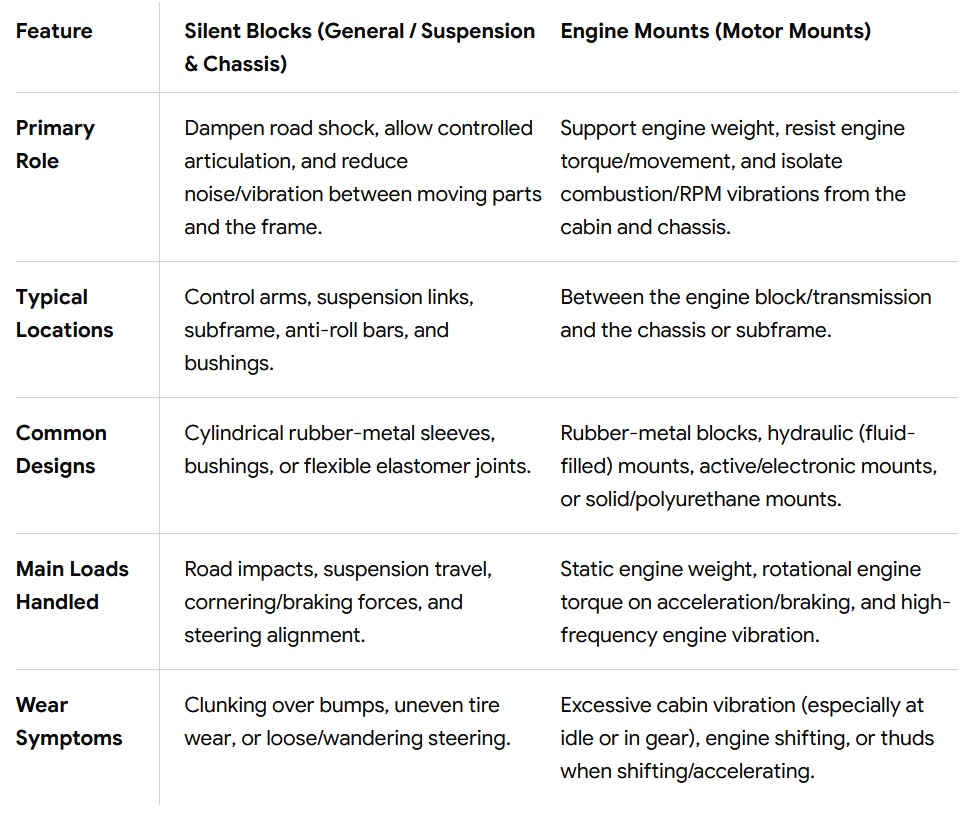
Engine mounts are a type of silent block, though not all silent blocks are engine mounts.
Silent blocks are used in the suspension and steering systems, whereas engine mounts are used to secure the engine and gearbox to the chassis.
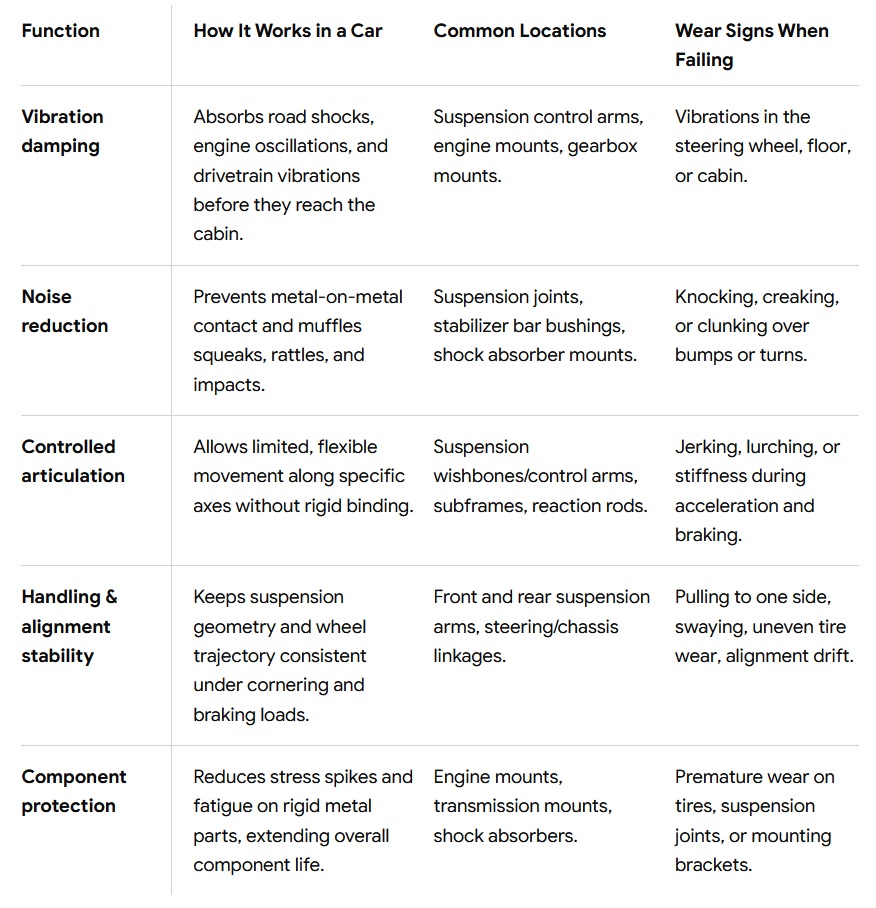
- Functions of silent blocks.
Silent blocks perform several critical functions that significantly improve the driving experience:
- Vibration damping.
They reduce vehicle vibrations, resulting in a more comfortable ride on both smooth roads and uneven surfaces.
- Improved stability.
By reducing noise and vibrations, they contribute to greater smoothness and stability while driving, even when cornering or encountering changes in road conditions.
- Facilitation of movement.
They allow for flexible and controlled movement of suspension system components, which is essential for keeping the vehicle in motion and absorbing road impacts.
- Reduced maintenance.
They require little to no periodic maintenance, making them an efficient, low-maintenance option for enhancing the driving experience.
- Minimization of wear on other components.
They help reduce premature wear on other parts of the vehicle—such as shock absorbers and suspension components—thereby extending their service life.
- Key factors that reduce their service life.
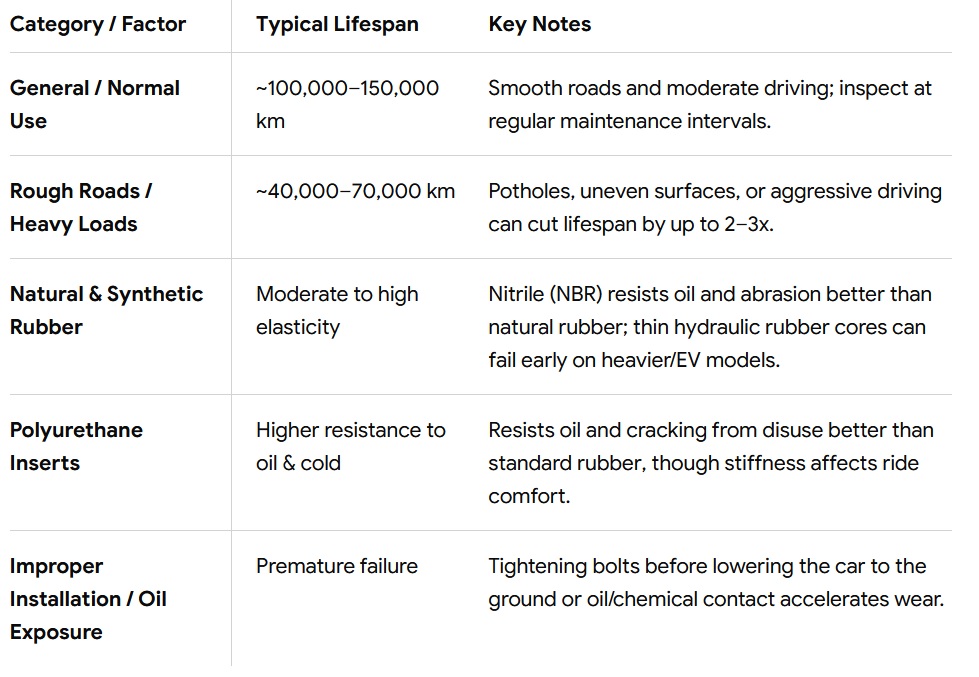
- Road surface condition.
Frequently driving on dirt roads or cobblestone streets, or driving over speed bumps without slowing down.
-
- Climate and environment.
Extreme exposure to cold, intense heat, salt air in coastal areas, or contact with leaking engine oil can cause the rubber to dry out and crack.
-
- Incorrect installation.
Tightening the bolts of a silent block (bushing) while the vehicle is lifted—with the suspension hanging—rather than with the vehicle’s weight resting on the ground, creates constant torsion that causes the rubber to fail within just a few thousand kilometers.
- Signs that replacement is needed.
- Metallic noises or sharp knocking sounds ("clonks") when driving over potholes or braking.
- Squeaking sounds (reminiscent of an old bed) when driving over speed bumps.
- Excessive vibrations in the steering wheel or cabin while idling (indicating wear in the engine mounts).
- Uneven tire wear along the edges and a loss of steering precision.
- Imprecise handling: A "floaty" feeling in the steering, abnormal vibrations in the cabin, or the vehicle veering off course during acceleration or braking.
In Spain, a silent block with superficial cracks is generally considered a "minor defect" during the mandatory vehicle technical inspection-MOT. However, if excessive play is observed or the rubber has detached, it is classified as a "serious defect," which can lead to a failed inspection result.
- Maintenance of silent blocks.
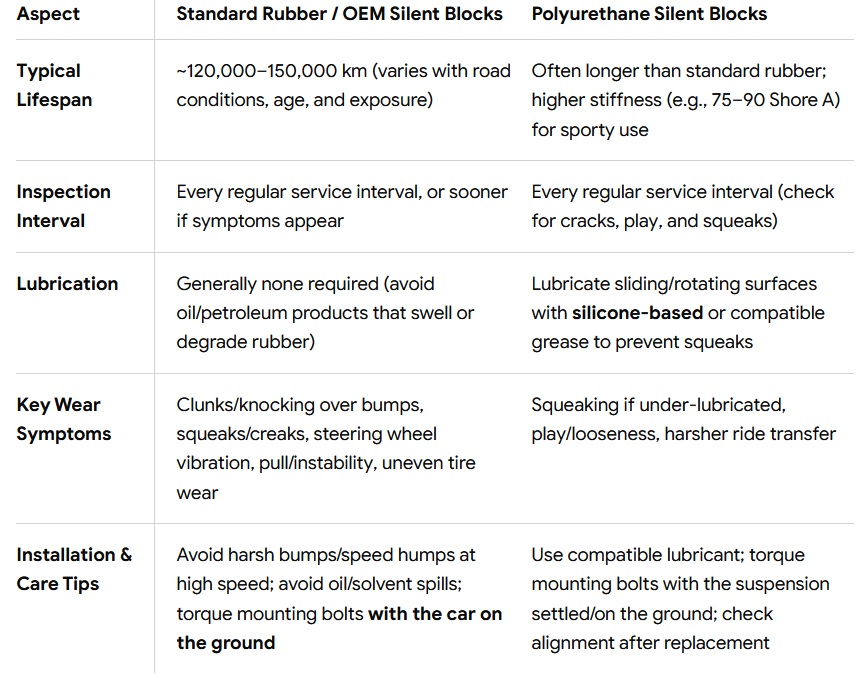
Preventive and corrective maintenance for silent blocks involves periodic visual inspections, cleaning to remove chemical agents, and lubrication with specialized products to prevent premature cracking and the development of noises in the suspension or engine. The following precautions are recommended:
- Avoid petroleum-based products.
Never use engine oil, gasoline, or conventional penetrating oils to lubricate rubber silent blocks, as these substances cause the rubber to dissolve and swell.
- Final tightening while at rest.
When replacing a suspension silent block, the final tightening of the bolts must be performed while the vehicle is resting on the ground in its normal operating position; this ensures that the rubber is not left in a twisted or strained state while at rest.
- Durability of silent blocks.
Under normal conditions, the service life of silent blocks typically ranges from 120,000 to 150,000 kilometers. However, it is important to note that factors such as exposure to extreme temperatures or contact with oils can accelerate their wear. Therefore, it is essential to conduct periodic inspections to identify signs of deterioration—such as cracks or damage to the material—and to determine the appropriate time for their replacement.
- Implications for fleet management.
The main consequences of a faulty silent block (bushing) include increased vibrations, reduced stability, greater noise transmitted through the vehicle chassis, and a decline in ride comfort.
The following measures are recommended:
- Vehicle maintenance.
Vehicle maintenance must be carried out in accordance with the manufacturer’s instructions and within the established timeframes.
During each maintenance service, a visual and mechanical inspection of the silent blocks should be performed, and the rubber components should be treated lubricated or conditioned—a maintenance step that is often overlooked.
Typically, a silent block is only replaced when it is in poor condition, causing significant noise or excessive vibrations.
- Driver training.
Drivers should be trained to recognize signs such as increased vibrations, reduced stability, higher noise levels transmitted through the chassis, or a decline in ride comfort. Drivers must report these issues to the workshop supervisor or fleet manager.
- Periodic Technical Inspection-MOT.
If a silent block exhibits excessive play or the rubber has detached, it is classified as a "serious defect," which may result in the vehicle failing its periodic technical inspection-MOT.
Slide 3. Thank you for your time.
The class has developed what silent blocks-bushings are, their functions, their maintenance, and their implications for fleet management, see you soon.