Electric vehicle tires are more expensive and have a shorter lifespan.
Maintaining an electric vehicle (EV) can prove more costly than expected due to a component that, at first glance, does not appear significantly different from those on combustion-engine vehicles: the tires. While there is no fixed additional cost that applies to every model, data collected across various markets point to higher replacement prices and a service life that—under certain conditions—can be considerably shorter.
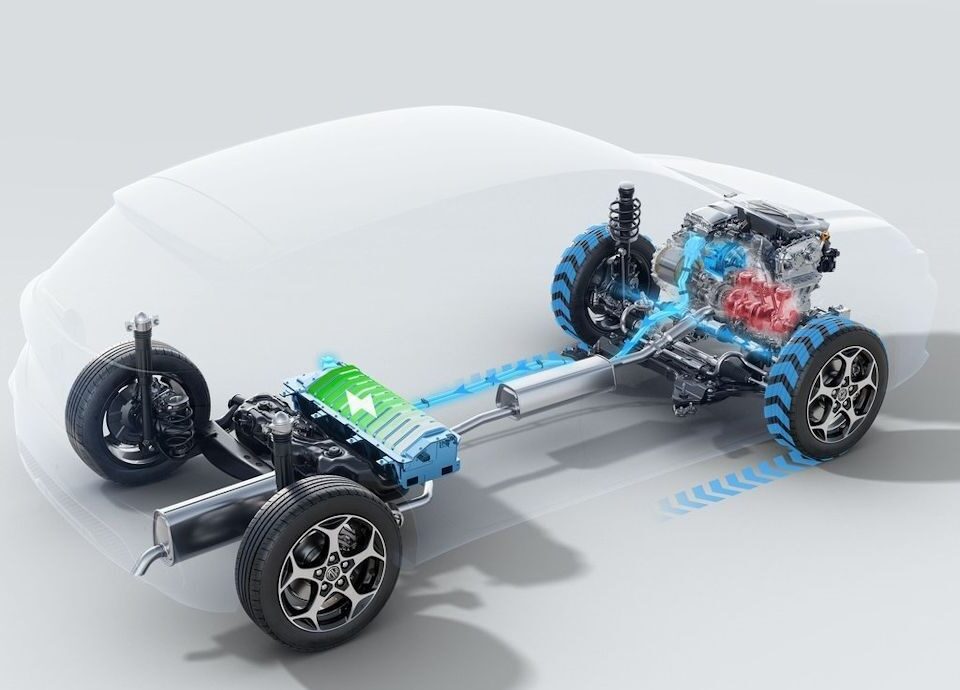
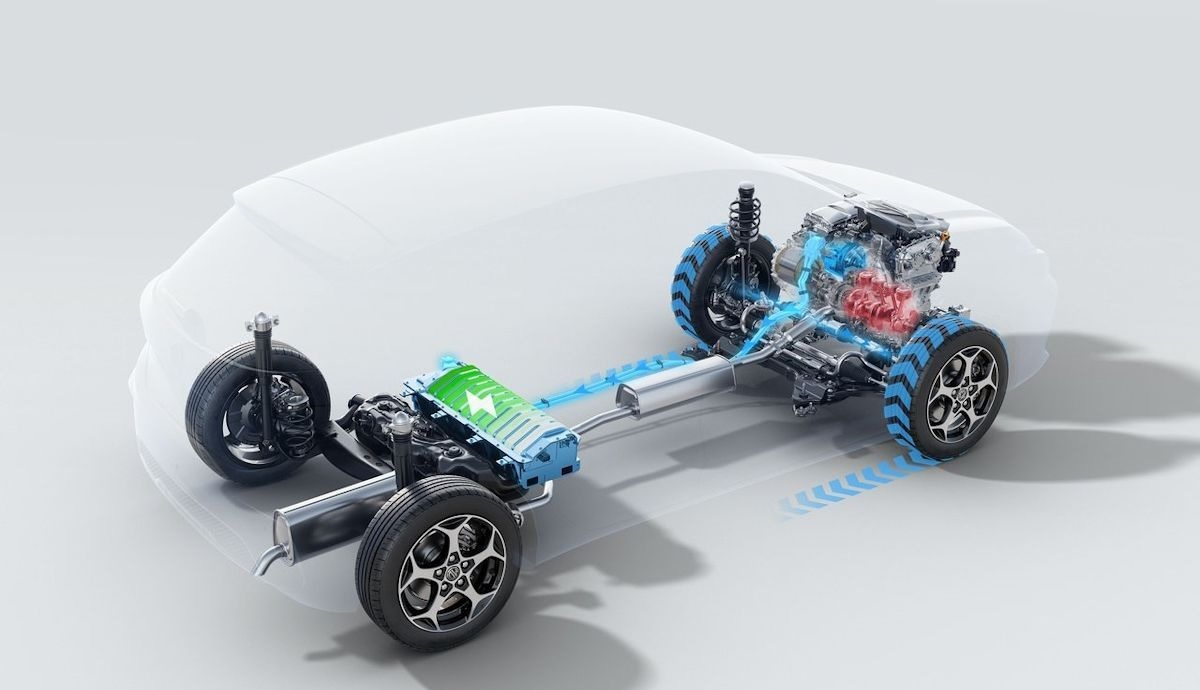
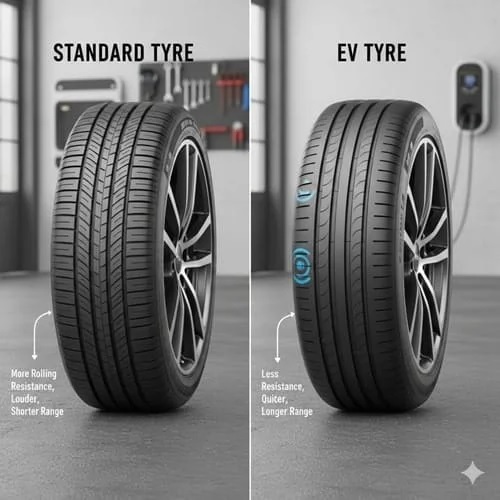
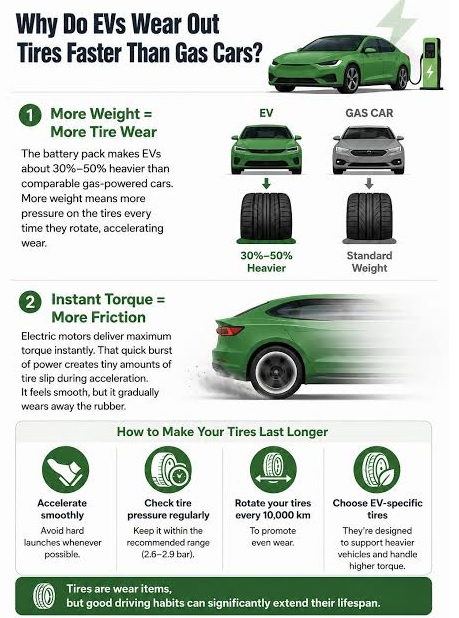
One of the primary differences lies in the demands placed on the tires of these vehicles. The weight of the batteries, the instant delivery of torque, and the need to minimize energy consumption have prompted manufacturers to develop specific tire compounds and structures. Furthermore, technologies designed to enhance acoustic comfort—such as a layer of foam installed inside the tire—can also make certain types of repairs more complex.
Electric vehicles require more frequent tire replacements, and the cost can be 32% higher.
A comprehensive analysis by the British platform Epyx, based on a dataset comprising nearly 470,000 tire-related invoices from 2024, helps quantify some of this disparity. As of August 2025, the average price of a tire for an electric vehicle reached £246 (approximately €295), compared to £187 (about €224) for combustion-engine models. This represents a 32% increase in costs—a gap that has remained relatively stable since 2023.
It is also worth noting that there are significant differences in tire wear. According to data provided by Epyx, the first tire replacement for electric vehicles occurred at around 23,100 kilometers, whereas for combustion-engine vehicles, it occurred at approximately 29,500 kilometers. In Spain, the Dautos Car workshop in Marbella has identified a significant difference within its own fleets, with average lifespans of 28,955 and 39,179 kilometers, respectively. However, it is important to note that these assessments were based on specific samples, and the results are not necessarily representative of all vehicles.
To meet these increased demands, the industry has developed tires with higher load ratings, including those marked with the designation "HL" (High Load). For instance, an HL 245/40 R19 101 Y tire can support up to 825 kilograms, compared to 750 kilograms for an equivalent "XL" (Extra Load) tire and 670 kilograms for a standard tire. While this classification is not limited exclusively to electric vehicles, it is particularly significant for heavier vehicles. Consequently, it is essential to adhere to the load specifications established by the manufacturer.
A layer of foam reduces noise, but it also introduces new challenges in the workshop.
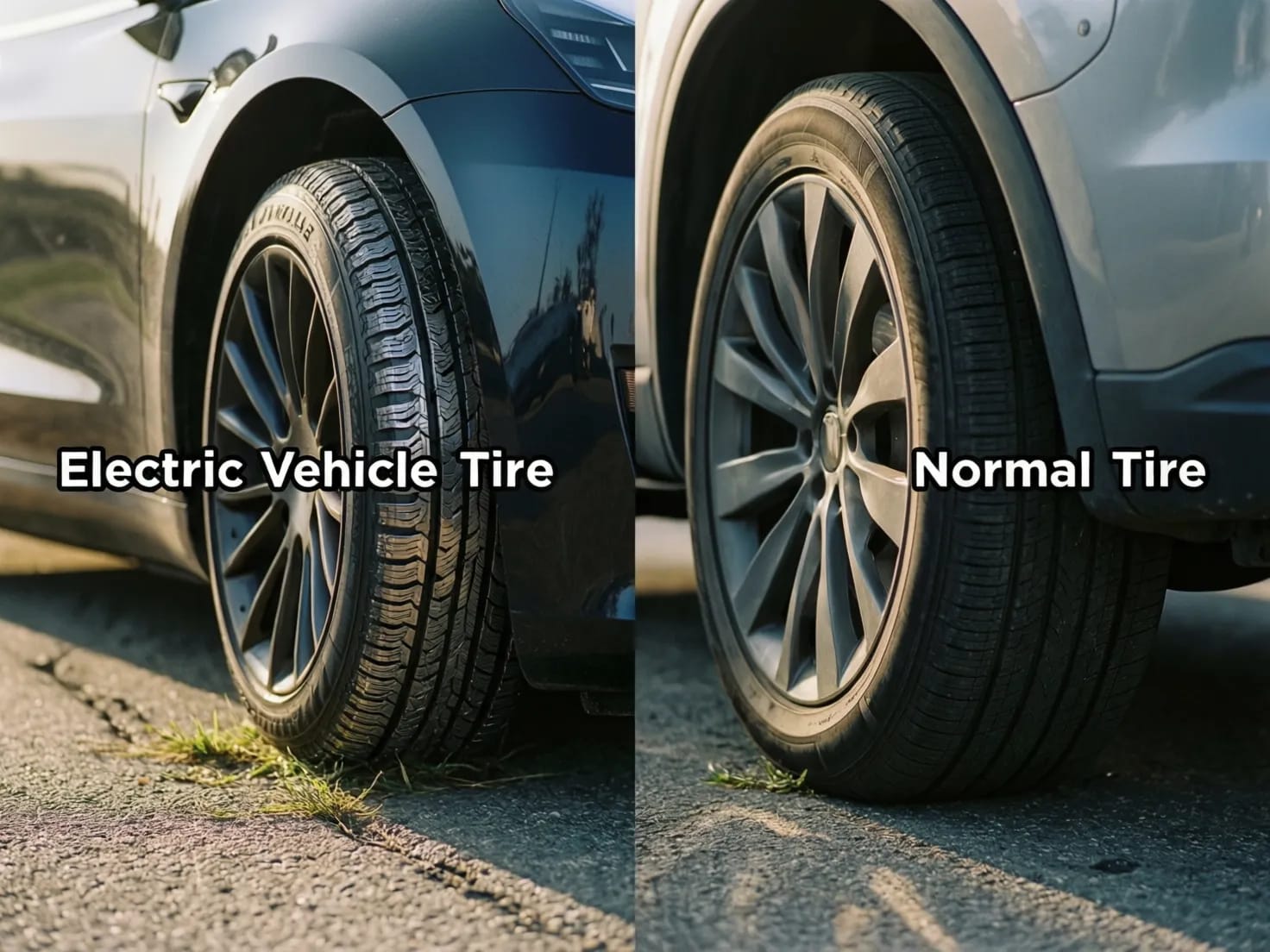
It is worth noting that certain tires designed for electric vehicles feature a specific element—strategically placed beneath the tread—that might easily go unnoticed. A layer of polyurethane foam, bonded to the inner surface, serves primarily to absorb vibrations and reduce the noise transmitted into the vehicle cabin. This is particularly significant in electric vehicles, where the absence of an internal combustion engine makes road noise more noticeable. According to estimates by Hankook, tires account for approximately 40% of the noise generated by these vehicles, compared to 30% for internal combustion engine vehicles.
This technology is marketed under various trade names, such as Michelin’s "Acoustic," Continental’s "ContiSilent," Pirelli’s "PNCS," and Goodyear’s "SoundComfort." Continental claims a reduction of up to 9 decibels in perceived noise, while Michelin reports a 20% decrease in interior noise at certain frequencies. However, it is important to note that these results are not directly comparable, as each manufacturer employs its own measurement methods. Furthermore, the European tire label provides information regarding external noise, but not the noise experienced by the vehicle's occupants.
The presence of foam also affects how punctures are handled. Continental and the specialist firm REMA TIP TOP point out that, for a permanent repair, the tire must be dismounted and the foam material removed from the affected area before the repair procedure can be carried out. It is important to emphasize that the foam does not function as a self-sealing system; while it is generally not necessary to replace the foam after a repair, it is essential to verify that the tire still meets all safety requirements for continued use. Manufacturers such as Pirelli and Goodyear allow for the repair of their "acoustic" tire models, provided that specific technical conditions are met.
In any case, not all electric vehicles require tires equipped with foam, nor are they obligated to use these more expensive tires. The final price will be subject to variables such as diameter, dimensions, load index, and homologation specifications. Therefore, although available data suggest potentially higher maintenance costs, it is necessary to assess the actual difference for each specific vehicle and tire, rather than automatically attributing the entire additional cost to the powertrain.