The Real-World Failure of a Hydrogen-Powered Garbage Truck in Heidelberg
The bet on hydrogen promised to transform waste collection in Heidelberg, a German city that added a fuel-cell-powered garbage truck to its municipal fleet in 2023. The vehicle, purchased for nearly 1,200,000 euros, was intended to demonstrate the viability of this technology as a replacement for diesel in one of the most demanding urban transport environments. However, just three years after its introduction, the city council has decided to abandon the original propulsion system and replace it with a conventional one.
This decision was made in response to reliability issues that have hindered the truck’s regular use since it entered service. According to municipal records, the vehicle remained out of service for approximately 64% of the days between 2023 and August 2026. The situation became so severe that the city council approved an additional 240,000 euros to install a new chassis equipped with a diesel engine, aiming to restore the vehicle's operational capacity.
The project was originally conceived with very different expectations. The city council purchased the truck in 2022 for 1,199,981 euros, with 744,241.50 euros covered by a public grant linked to the H2Rivers program. It was officially unveiled in March 2023, when municipal authorities presented it as a significant step toward zero-emission waste management. The vehicle was also intended to serve as a test case for the potential of hydrogen under real-world operating conditions.
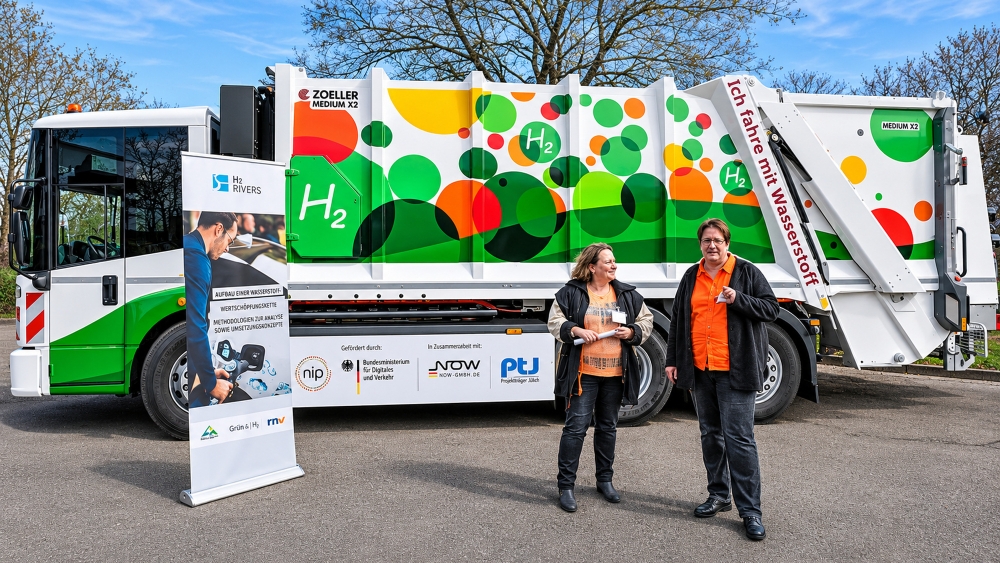
A truck costing nearly 1,200,000 euros that sat idle 64% of the time.
The results experienced by the city council highlight the gap between initial expectations and reality. Between 2023 and August 7, 2026, there were 833 days of potential operational activity. However, the truck was only able to operate for 300 days; the remaining 533 days consisted of 346 days in the workshop and 187 additional days of inactivity. This represents an unavailability rate of 63.99%.
It is highly concerning that the situation has progressively deteriorated over time. In 2023, the vehicle was inactive for 43.87% of the recorded days, a figure that rose to 53.75% in 2024. A year later, the situation worsened significantly: throughout 2025, the vehicle was only in service for 41 out of the 220 days accounted for. Consequently, the system remained out of operation for 81.36% of the period analyzed.
Provisional data for 2026 show no significant recovery. As of August 7, the truck had spent 73 days in the workshop and another 52 days idle, compared to only 23 days of actual service. This indicates an inactivity rate of 84.46%—the highest recorded since the system was first implemented. To ensure waste collection, municipal services have been forced to repeatedly rely on an older backup vehicle.
Given this situation, the City Council commissioned a technical assessment to determine whether the truck’s reliability could still be restored. Following a comprehensive evaluation, the findings were unfavorable. Municipal authorities have concluded that the vehicle will not achieve a level of consistently reliable operation. The administration has also confirmed that it has consulted with other municipal operators, several of whom have reported similar issues and periods of downtime with their own hydrogen-powered trucks.
They will spend an additional 240,000 euros to convert it to diesel.
The solution adopted by Heidelberg involves retaining a portion of the truck while completely replacing its propulsion system. To this end, the City Council will acquire a new chassis equipped with a conventional engine, onto which the existing waste-collection body—along with the vehicle’s current bin-lifting mechanism—will be installed. The original hydrogen-powered chassis will be repurposed as a source of spare parts for the municipal fleet.
The operation is estimated to cost 240,000 euros—an amount the City Council considers more manageable than purchasing an entirely new garbage truck. According to municipal calculations, acquiring a new vehicle with comparable specifications would entail an expenditure of approximately 426,200 euros. Consequently, by reusing the existing body and replacing the propulsion system, the city will avoid an additional cost of 186,200 euros compared to the purchase of a complete new vehicle.
The City Council’s Main and Finance Committee unanimously approved the funding for this conversion on September 30. However, the transition to diesel has not yet been finalized. The municipal authority estimates that it will take approximately twelve months to receive the new chassis and complete the work, which will be carried out by a specialized firm. The corresponding budgetary allocation is planned for 2027.
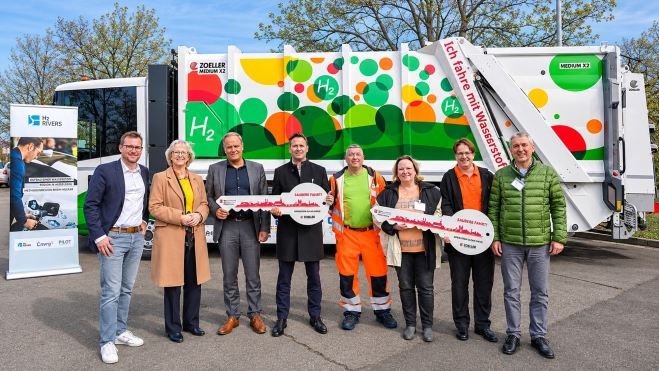
A hydrogen project that has fallen short of expectations.
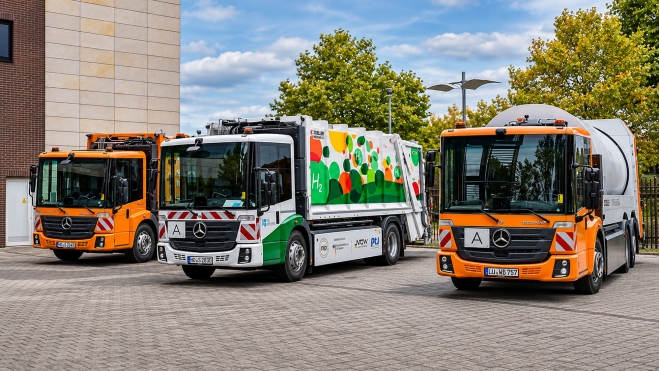
The truck was developed based on a Mercedes-Benz eEconic, equipped with an electric powertrain supported by a hydrogen fuel cell, and featured a waste-collection body from Zöller-Kipper. The vehicle was fitted with four hydrogen tanks—each with a capacity of 16.8 kilograms—as well as a 30kW fuel cell. According to technical specifications, the vehicle had a range of approximately 250 kilometers, which is sufficient to cover many municipal waste-collection routes.
Its introduction was part of the H2Rivers project, an initiative aimed at promoting the use of hydrogen in Germany’s Rhine-Neckar region. The cities of Mannheim and Ludwigshafen also participated in the project, receiving similar vehicles. The primary objective was to move toward lower-emission mobility and gain practical experience with a technology that was still in the early stages of development for heavy-duty transport.
The situation in Heidelberg highlights the complexities that can arise when implementing a technology still under development in services that require high operational availability. Municipal records document various breakdowns and significant downtime. However, no detailed information has been provided regarding which components caused these failures, nor has there been an analysis of the feasibility of converting the system to a purely battery-electric setup. It is worth noting that, while an investment of nearly 1.2 million euros in a hydrogen-powered truck has been confirmed, the city has now decided to allocate an additional 240,000 euros to reverse that investment and return to using diesel.