
A Real-World Case Study: Electrifying Trucks at Welch Group
Road freight transport remains dominated by diesel-powered trucks; however, some business owners are beginning to identify economic justifications for changing this status quo. The issue is not merely about reducing pollutant emissions; it is also essential to determine whether electric vehicles can prove more cost-effective in the long run. In fact, a British company that has worked with both technologies for several years has quantified the expected savings.
Chris Welch, CEO of Welch Group, and his team have developed an economic model to compare the operation of a diesel fleet against one that is progressively electrified. Welch Group is a family-owned transport and logistics company based in the United Kingdom. The results are highly significant: the company estimates it could achieve annual savings of approximately £792,000 (roughly €900,000) by 2035. This figure depends on two key factors: first, an increase in the number of electric trucks, and second, the potential for other companies to utilize their charging facilities.
As noted in statements by Welch—reported by the British outlet *GreenFleet*—"the price of diesel proves that our decision to switch to electric was the right one." He maintains that he is already seeing significant savings in energy costs for his electric vehicles compared to diesel ones, though he has not provided specific details regarding the exact amount currently being saved. The core argument is that every rise in fuel prices makes investing in electrification more attractive, while reinforcing the inherent advantages of having access to an alternative energy source.
The calculation that makes their strategy profitable.
One of the most notable findings from an internal study conducted by the Welch Group concerns the costs associated with vehicle charging. The company projects that the total cost of energy consumed by its electric vehicles—factoring in infrastructure expenses allocated to each unit—could drop from approximately 42 pence per kWh in 2026 to just 9.1 pence by 2035. This represents a reduction of nearly 78%, contingent upon meeting growth and charger utilization forecasts.
The explanation lies not merely in procuring electricity at a lower price, but in the efficient optimization of prior investments. The Welch Group aims to transform its charging facilities into a service available to other transport operators, ensuring that chargers do not remain underutilized while the company’s own trucks are out on the road. By implementing a charging fee for this energy and spreading infrastructure costs across a larger number of vehicles, the company anticipates a progressive decline in the effective cost per charge.
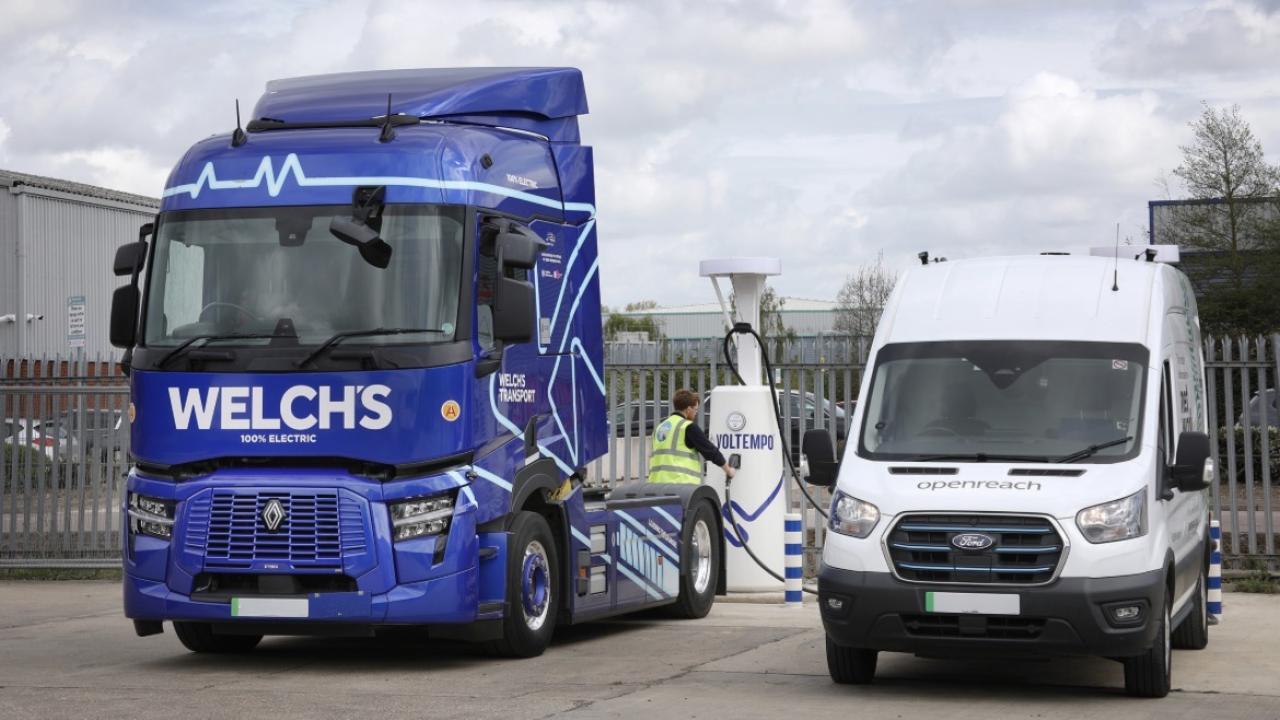
In fact, the company has already begun implementing this strategy at its Duxford site, near Cambridge, which features a high-power charging hub developed in collaboration with Voltempo. The facility includes six charging bays: two designed to accommodate full tractor-trailer combinations, and four intended for tractor units. The system is capable of dynamically distributing up to 1 MW of power among connected vehicles, based on their specific charging requirements.
Additionally, the company has completed a second installation—also featuring six bays and 1 MW of power—in Bedford, as part of the UK’s eFreight 2030 program. The primary objective of this project is to establish a network that facilitates electric transport operations, thereby ensuring independence from public charging infrastructure. At the same time, vehicles from other companies will be able to utilize available capacity through a reservation and payment system, creating an additional revenue stream for the Welch Group.
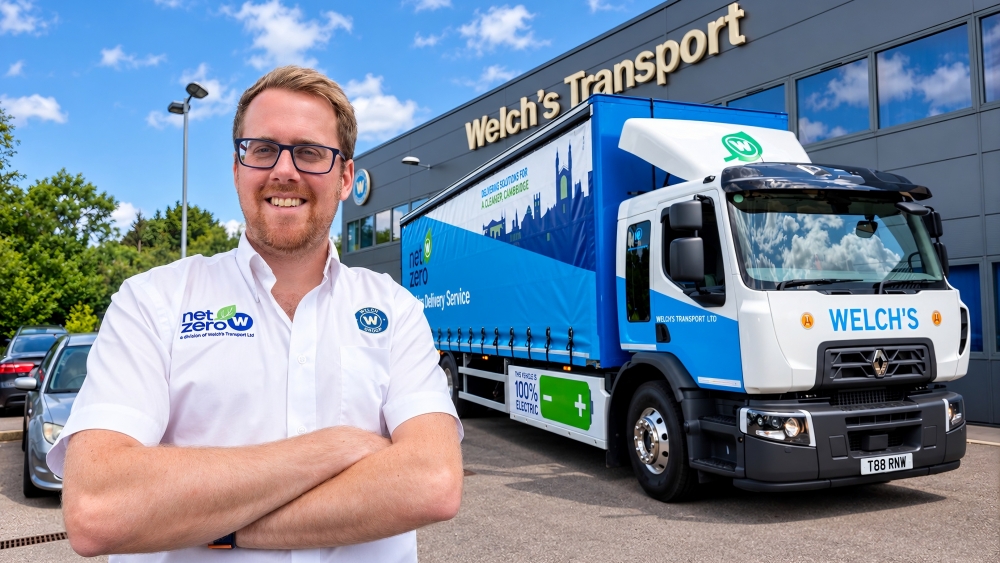
The company already uses electric trucks from Renault and DAF.
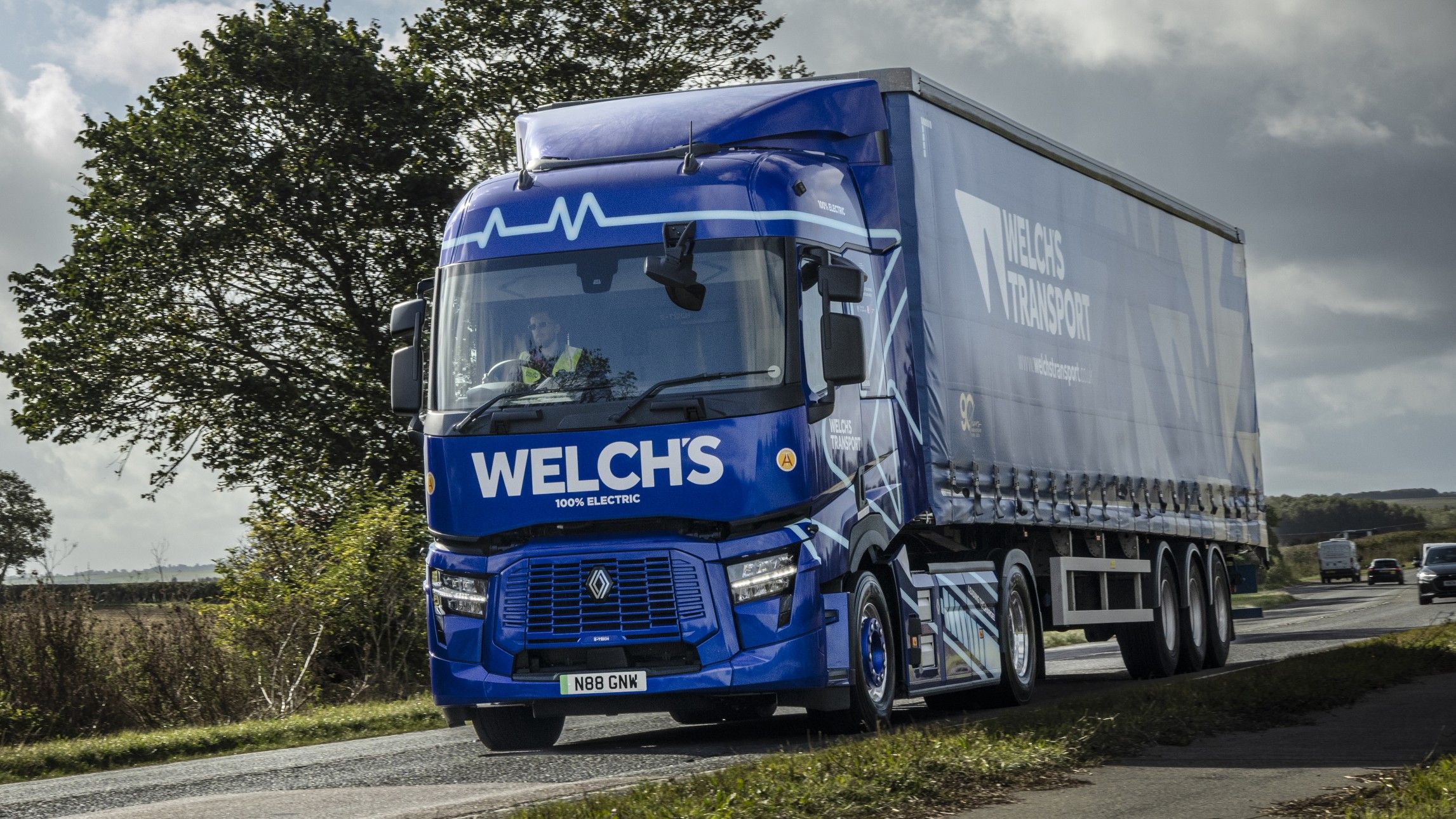
Chris Welch’s investment in electric trucks is not a recent development. His company began incorporating them in 2023, when it put a 19-tonne Renault Trucks E-Tech D Wide into service. Subsequently, 42-tonne Renault Trucks E-Tech T electric tractor units were added as part of the eFreight 2030 program, with the goal of evaluating their performance in real-world heavy-duty transport operations.
Since then, the Welch Group has continued to expand its fleet with new units from Renault Trucks.
According to its top executive, the decision is directly linked to profitability. As Mr. Welch has stated, while reducing emissions is a matter of great importance, so too is protecting commercial margins. Furthermore, he believes that shared infrastructure has the potential to transform charging facilities into a commercial asset. Rather than simply replacing diesel trucks with electric models, the goal is to develop a more efficient business—one capable of reducing its exposure to fuel price fluctuations.
The situation in the UK offers a valuable perspective for interpreting these calculations. According to an analysis by New AutoMotive, the rise in diesel prices over the summer added approximately £35 million per week to the fuel bills of the country’s transport operators. On September 30, the average price of diesel reached 199.9 pence per liter—an increase of 35 pence since July 8. This surge has a significant impact on companies that operate large fleets and regularly cover long distances.
However, it should be noted that the electrification of heavy-duty transport still faces substantial hurdles. Factors such as high vehicle purchase prices, grid connection requirements, infrastructure costs, and uncertainty regarding the residual value of batteries all complicate investment decisions. According to the specialized publication New AutoMotive, 97% of new trucks registered in the UK in 2025 were equipped with diesel engines, while electric vehicles accounted for less than 1% of registrations during the first eight months of 2026.
Consequently, the approximately 900,000 euros in savings projected by the Welch Group do not represent realized gains, nor do they guarantee that other transport operators would achieve similar results. The internal projection for the year 2035 is subject to a number of key factors, such as the growth of the electric vehicle fleet, energy prices, and revenue generated from the sharing of charging infrastructure. It should be noted that this analysis does not cover the full total cost of ownership of the vehicles over their entire lifespan. Nevertheless, it presents a specific case study on how certain companies are seeking to turn the electrification of heavy-duty transport into an economic opportunity.