

Download the audio
- Introduction.
The class develops the new E20 fuel, its implications for drivers, whether it will be cheaper, and which cars will be able to use it.
- The new E20 fuel.
The European Commission is considering the adoption of new regulations for the introduction of E20 gasoline throughout Europe, with the aim of adapting the existing legal framework. It is considered more environmentally friendly than current fuels and more economical than e-fuels or synthetic fuels. Some experts estimate that this technology will be the future option that allows gasoline-powered cars to remain on the road longer.
The European Union has announced its intention to amend the Fuel Quality Directive, which currently stipulates a maximum ethanol content of ten percent (as E10 fuel) and prohibits its sale. In a letter from the President of the European Commission to various members of the European Parliament, Brussels guarantees that it “will consider approving a higher ethanol content (E20),” while also examining issues related to engine compatibility with existing vehicles and incentives for investment in advanced biofuels.
However, while this is happening, E20 fuel still raises numerous questions for drivers, mainly due to practical issues regarding its availability, compatibility, and potential consequences. Some manufacturers have already begun to provide information on technical approvals.
- What exactly is E20?.
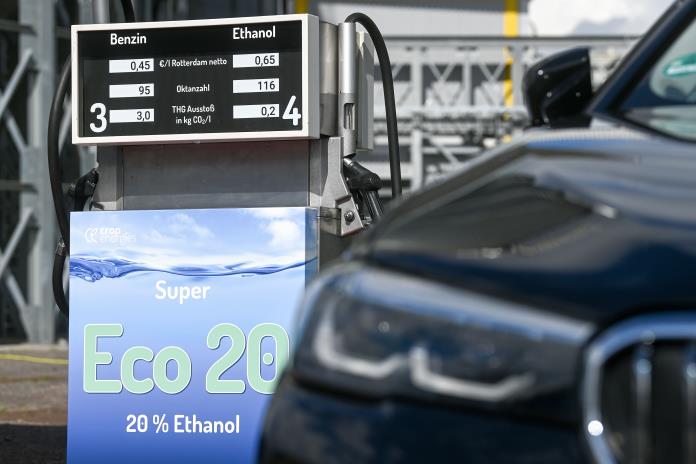
E20 is a gasoline fuel composed of 20% bioethanol and 80% conventional gasoline. This means that the proportion of renewable components is significantly higher than that of E10. The main objective of this initiative is to reduce carbon dioxide (CO2) emissions from the existing vehicle fleet without requiring technical modifications to the vehicles.
- What is the current status of the rollout?.
The European Commission is currently evaluating the possibility of authorizing ethanol levels higher than those currently permitted. The current limit stands at ten percent. At this time, no specific launch date has been set for the E20 model. The industry is considering a timeline spanning 2027 or 2028, subject to current regulations and standardization processes.
- Is E20 already available at gas stations?
No. The fuel is not currently available for general sale. In Mannheim-Germany, as part of a pilot project, the performance of E20 is being evaluated in fleet operations. The main objective of this project is to obtain technical results and long-term data to support the viability of a potential market launch.
- Can my car run on E20 fuel?
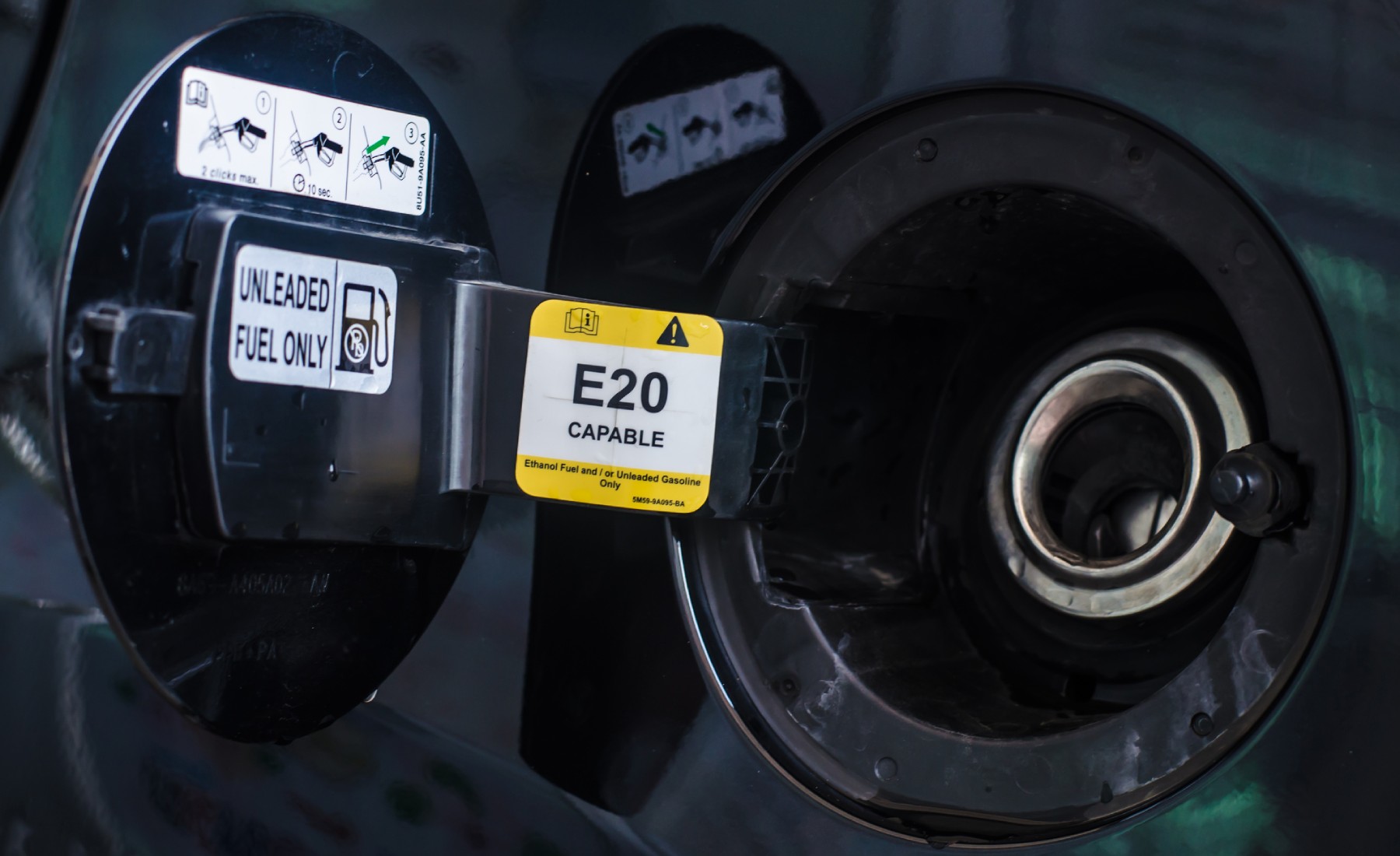
The information provided depends on the model and year of manufacture. According to Volkswagen, vehicles from the Volkswagen, Skoda, Seat, Cupra, Volkswagen Commercial Vehicles, and Audi brands are designed to run on E20 fuel starting with the 2016 model year. This includes high-performance models such as the Audi RS6 and the Audi R8. Restrictions apply to certain variants of the 2.0 TFSI engines with power output exceeding 300 horsepower. Likewise, both BMW and Mercedes-Benz are making preparations to adapt their engines to a higher ethanol content. However, for older vehicles, its use must be explicitly approved by the manufacturer.
- Which cars are not suitable?.
In particular, older gasoline engines may experience problems, as the higher ethanol content puts greater strain on components such as gaskets and fuel lines. Furthermore, vehicles that are not compatible with E10 should not be filled with E20 either.
- What happens if I accidentally fill the tank with E20?.
This is not a problem for approved vehicles. Vehicles that have not been approved for this fuel may experience long-term damage to the fuel system. Although no immediate failures have been reported, it is recommended to dilute the fuel with conventional gasoline, E5, or E10 as soon as possible.
- How does E20 affect fuel consumption?.
Ethanol contains less energy than gasoline. This results in an approximate 3% increase in fuel consumption. The actual increase in fuel consumption depends on the type of engine and driving style.
- Will E20 be cheaper than current fuel?.
Currently, no binding price has been set. Given that the biofuel component is not subject to CO2 pricing, it is possible that E20 will be priced lower than E10 or fall within a similar range. Policy statements mention potential tax breaks, but more precise market data is needed for a comprehensive assessment.
- What is the potential for CO2 savings?.
According to current estimates, CO2 emissions are expected to be reduced by approximately 16% compared to fossil gasoline. It is important to note that this figure may vary, particularly depending on the origin of the bio-components used.
- Is it necessary to adapt the infrastructure for E20?.
The existing infrastructure at gas stations can largely continue to be used. Adjustments mainly focus on labeling, logistics, and quality control.
- Will the use of E20 become mandatory?.
Not at this time. E20 will likely be offered as an additional fuel option, similar to the current E5 and E10.
- Will E5 be phased out then?.
At this time, no final decision has been made regarding the future use of E5. The introduction of E20 could facilitate a gradual transition. Initially, different types of fuel may coexist. The viability of E5 will depend on the compatibility of the vehicle fleet. If the fleet is largely compatible, E5 could lose relevance.
- Does this affect the warranty?.
It is important to note that, in the absence of formal approval from the manufacturer, the use of E20 could compromise established warranties. No restrictions are anticipated for type-approved vehicles.
- What role does E20 play in comparison to electromobility?.
E20 is primarily considered a short-term solution for the existing vehicle fleet. In the long term, the electrification of transportation remains an essential component of climate strategy. E20 can complement this process, but not replace it.
- What criticisms have been leveled against the E20?.
Criticism has come from environmental organizations, such as the German Transport Club. These organizations point to potential land-use conflicts on agricultural land and question the actual CO2 balance in some cases. The association has described the E20 as a “utopian illusion” that fails to address the structural problems of the transportation sector.
In summary, the E20 is closer to potential implementation—both politically and technically—than it was a year ago. According to the first approvals issued by manufacturers, a portion of the vehicle fleet is already available. However, there are still unresolved issues related to regulation, actual environmental impact, and market development. Its launch by the end of the decade is considered feasible, although no decision has yet been made on the matter.
- Thank you for your time.
The class has developed the new E20 fuel, its implications for drivers, whether it will be cheaper, and which cars will be able to use it, see you soon.