

Download the audio
- Introduction.
The class develops the brands that pollute the least in the manufacture of electric vehicles.
- Polluting emissions in the manufacture of electric vehicles.
A report by Lead The Charge concludes that Western brands are advancing faster than Asian brands in decarbonizing the electric vehicle supply chain.
The race to manufacture electric cars is not only being fought on range or sales. It is also being fought on the sustainability of production. A new report by the environmental organization Lead The Charge examines which manufacturers are actually reducing emissions and social impacts in the electric vehicle supply chain and which still have a long way to go.
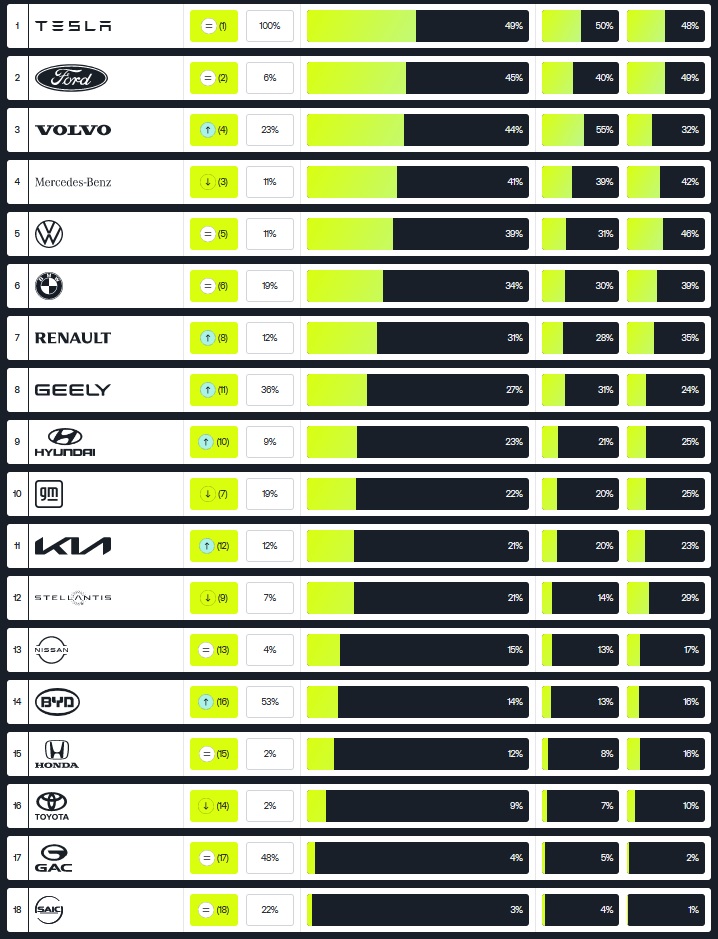
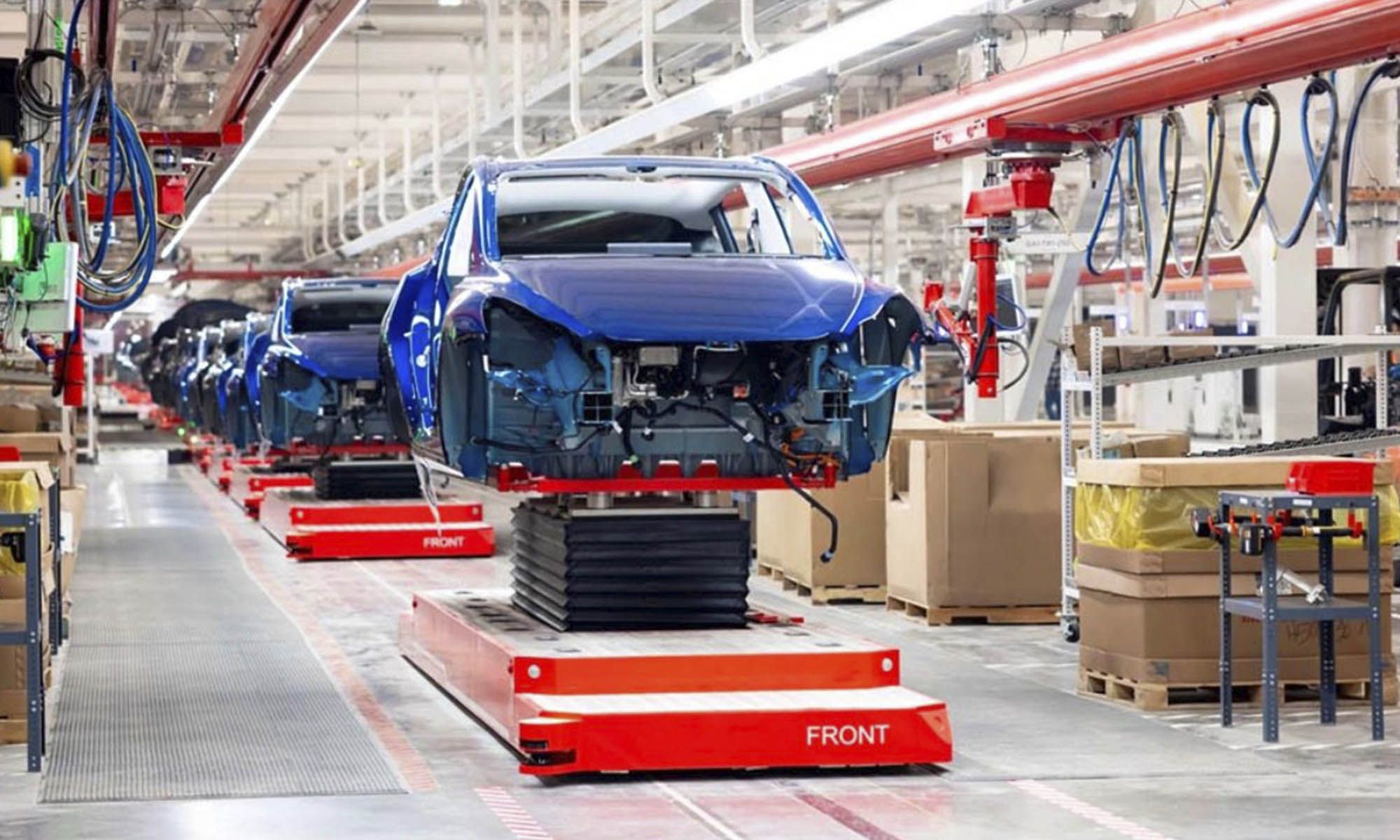
The study, which analyzes 18 major automakers around the world, concludes that some Western brands are making faster progress in creating cleaner and more responsible supply chains. Tesla tops the ranking, followed by Ford and Volvo.
- Tesla tops the ranking of most responsible manufacturers.
According to the report, Tesla obtains the best overall score, 49%, thanks to its advances in reducing emissions in production and controlling its supply chain. Behind the American company are Ford with 45% and Volvo with 44%, which have also promoted initiatives to improve the traceability of materials and reduce the carbon footprint in manufacturing.
The top five is completed by Mercedes-Benz 41% and Volkswagen 39%, European manufacturers that have stepped up their climate commitments and begun to introduce measures to use steel and aluminum with less environmental impact in their industrial processes.
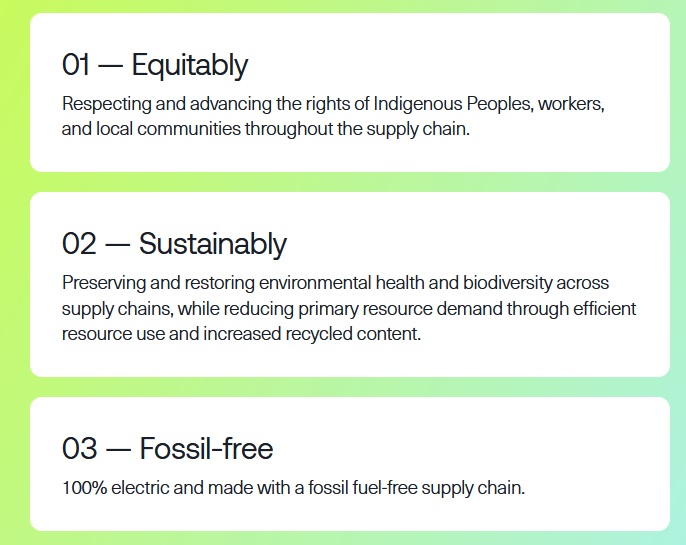
The researchers evaluated the companies on more than 80 indicators, including, among other aspects, emissions generated in the production of steel, aluminum, and batteries, respect for labor rights, protection of indigenous communities, and responsible practices in the mining of critical minerals.
- Battery manufacturing remains the big challenge.
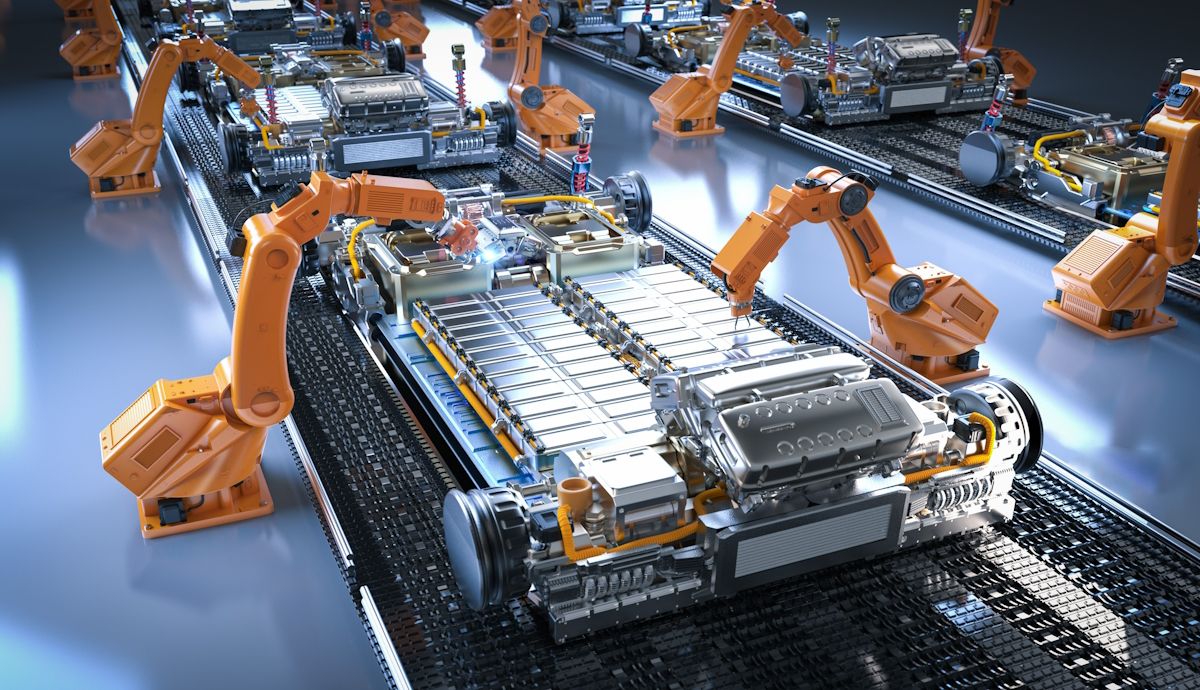
Although electric cars are considered essential for reducing emissions from the transport sector, their production still relies heavily on fossil fuels and intensive mining. In particular, battery manufacturing requires minerals such as cobalt, lithium, and nickel, the extraction of which can have significant environmental and social impacts.
One of the most prominent issues highlighted in the report is cobalt mining in the Democratic Republic of Congo, where various investigations have documented labor rights violations and poor working conditions.
The study also points out that much of the electricity used to manufacture electric vehicles or to charge them still comes from coal-fired power plants, although renewable energies are gradually gaining ground in the global energy mix.
- Wide differences between manufacturers.
The analysis reveals a significant gap between the leading companies and those lagging behind. While some brands have begun to implement clear decarbonization strategies, others have shown little measurable progress.
At the bottom of the ranking are manufacturers such as BYD, Toyota, Honda, GAC, and SAIC. The report notes that Toyota, BYD, and Honda scored 0% on indicators related to the decarbonization of steel, a key material in automobile production.
However, some companies have begun to make improvements. Toyota, for example, has made progress in battery sustainability by developing a design that facilitates disassembly and recycling.
- The sector is still far from meeting its climate targets.
Despite progress made by some manufacturers, the Lead The Charge report concludes that the automotive sector still has much room for improvement. On average, the 18 companies analyzed score only 24% on supply chain sustainability, just five points higher than the previous year.
This indicates that, although electric cars are essential for reducing transport emissions, the complete transformation of their production chain is still in its early stages.
The study's conclusion is clear: manufacturing cleaner electric vehicles is possible, but to achieve this, it will be necessary to accelerate investment in renewable energy, sustainable materials, and responsible mining.
- Thank you for your time.
The class has developed the brands that pollute the least in the manufacture of an electric vehicle, see you soon.