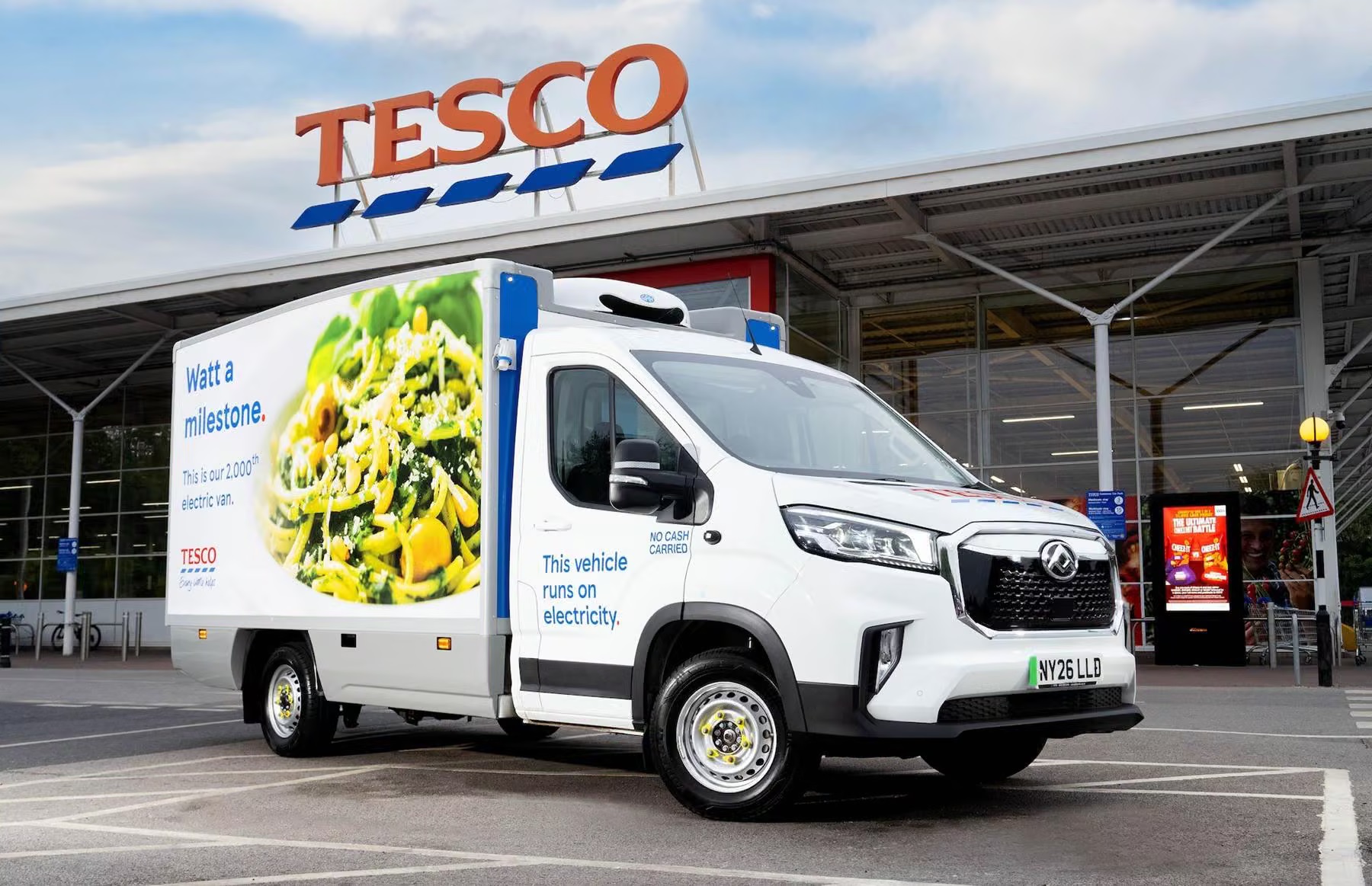
Tesco has put its 2,000th electric van into service for its home delivery operations
In 2020, Tesco introduced its first electric delivery van in the Greater London area. According to its latest sustainability report, the company's entire UK home delivery fleet consists of 6,000 vans. Of this total, 1,249 are electric, representing 21% of the fleet. With the leading grocery retailer now reaching the milestone of 2,000 battery-electric vehicles, these currently account for just over a third of its total fleet; Tesco confirms that this figure represents more than 30%.
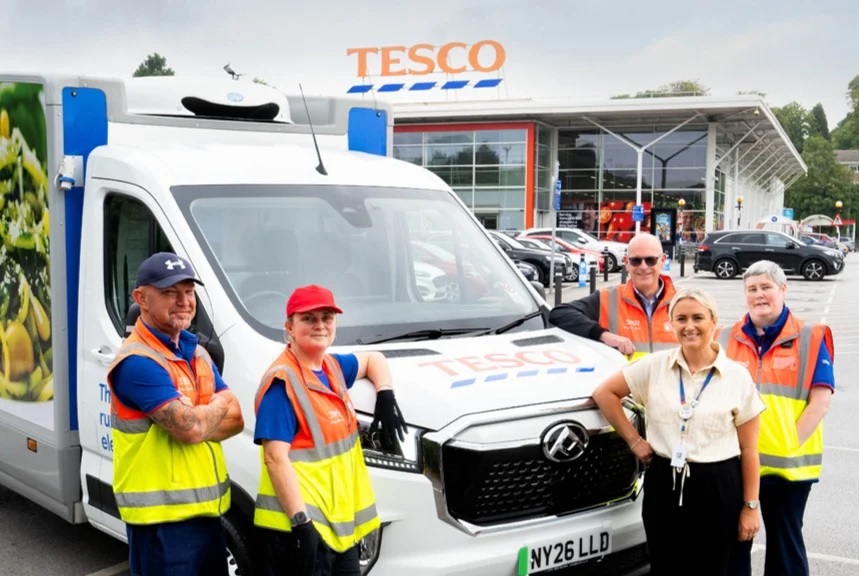
This milestone vehicle was delivered to the Tesco store in Hemsworth, West Yorkshire, which already operates six delivery vans for its home delivery service. Tesco did not specify the model, but the accompanying image shows a Maxus eDeliver 9, a vehicle that plays a significant role in Tesco's fleet.
From 720 to 2,000 electric transport vehicles in a year and a half.
The rollout has accelerated markedly in recent times. In March 2025, there were 720 electric delivery vans in service. Tesco launched its 1,000th van in early October 2025, assigning it to the Cardiff Extra store in Wales, which handles nearly 5,000 orders per week.
Tesco had initially announced a target fleet of 1,250 fully electric delivery vans by the spring of 2026. This interim goal was achieved with remarkable precision: in the sustainability report for the 2025/26 financial year, the company recorded 1,249 electric home-delivery vans in the UK, 547 of which were added during that final financial year alone. Since then, the fleet has seen significant growth, adding 750 more vehicles to reach a total of 2,000 units in a short period.
Around 750 units of the Maxus eDeliver 9 were ordered.
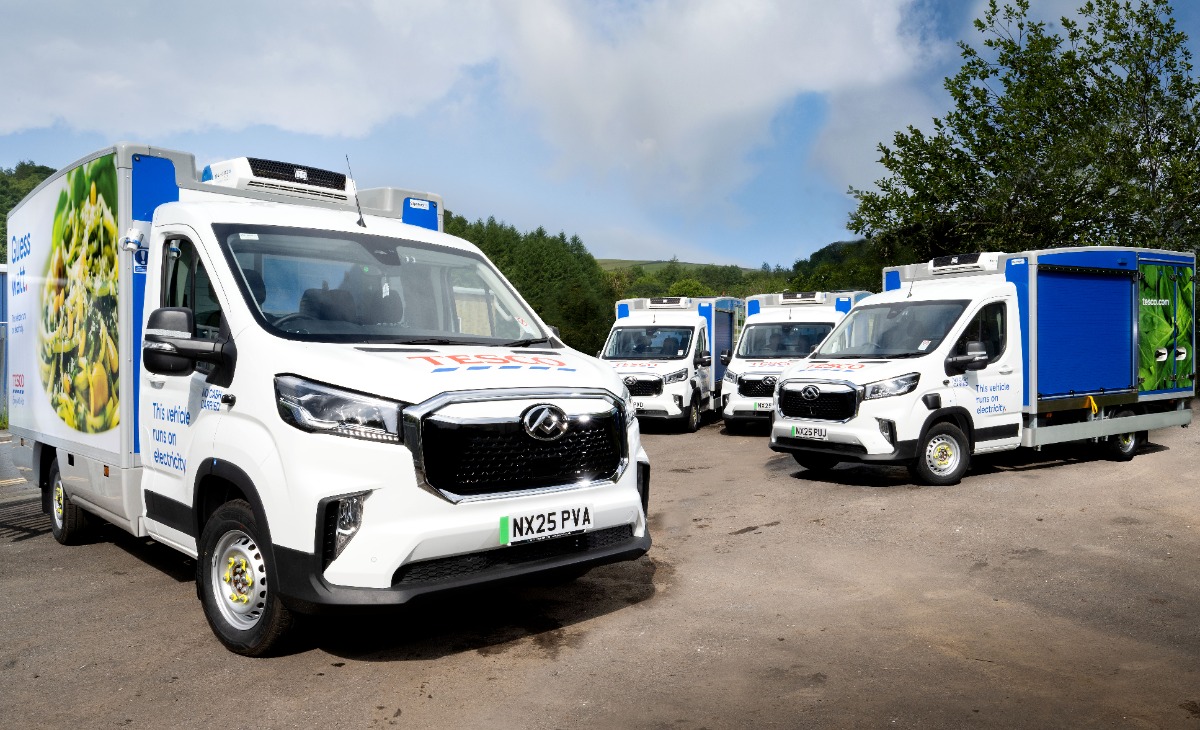
In the autumn of 2025, Tesco placed a major order with Harris Maxus UK for 750 Maxus eDeliver 9 units, marking the largest single order for electric vehicles the importer had received to date. Deliveries were scheduled to begin in February 2026.
The order volume almost exactly matches the increase from 1,249 to 2,000 electric vehicles. However, the statement issued by Tesco does not clarify whether all 750 vans have been delivered or what percentage of the new vehicle inventory they represent.
Regarding the configuration of the Maxus vans, it was reported last year that Tesco opted for the eDeliver 9 chassis-cab variant, equipped with refrigeration units from Thermo King and GAH. The vehicles feature a 150 kW electric motor and a 100 kWh battery. According to specifications provided by Maxus, the vehicle has a range of up to 352 kilometers. With a maximum DC charging power of 120 kW, the battery can charge to 80% in 45 minutes. The vehicle's gross vehicle weight is 4.25 tonnes, with a maximum payload of 1.9 tonnes.
The 2,000th electric delivery vehicle is also an eDeliver 9 with this configuration. This unit may well be part of the large-scale order, although Tesco has not issued an official confirmation to that effect.
Full electrification by the end of 2030.
"The arrival of our 2,000th electric home delivery van in Hemsworth marks another significant milestone on our journey toward a fully electric home delivery fleet across the UK by 2030," says Nick Potter, Tesco’s Transport and Distribution Director. According to company calculations, electrifying its home delivery fleet is equivalent to removing approximately 22,000 internal combustion engine passenger cars from UK roads each year.
Despite the notable recent acceleration of its electrification plans, the supermarket chain faces a major challenge: the remaining ~70% of the fleet must be electrified in just over four years.