
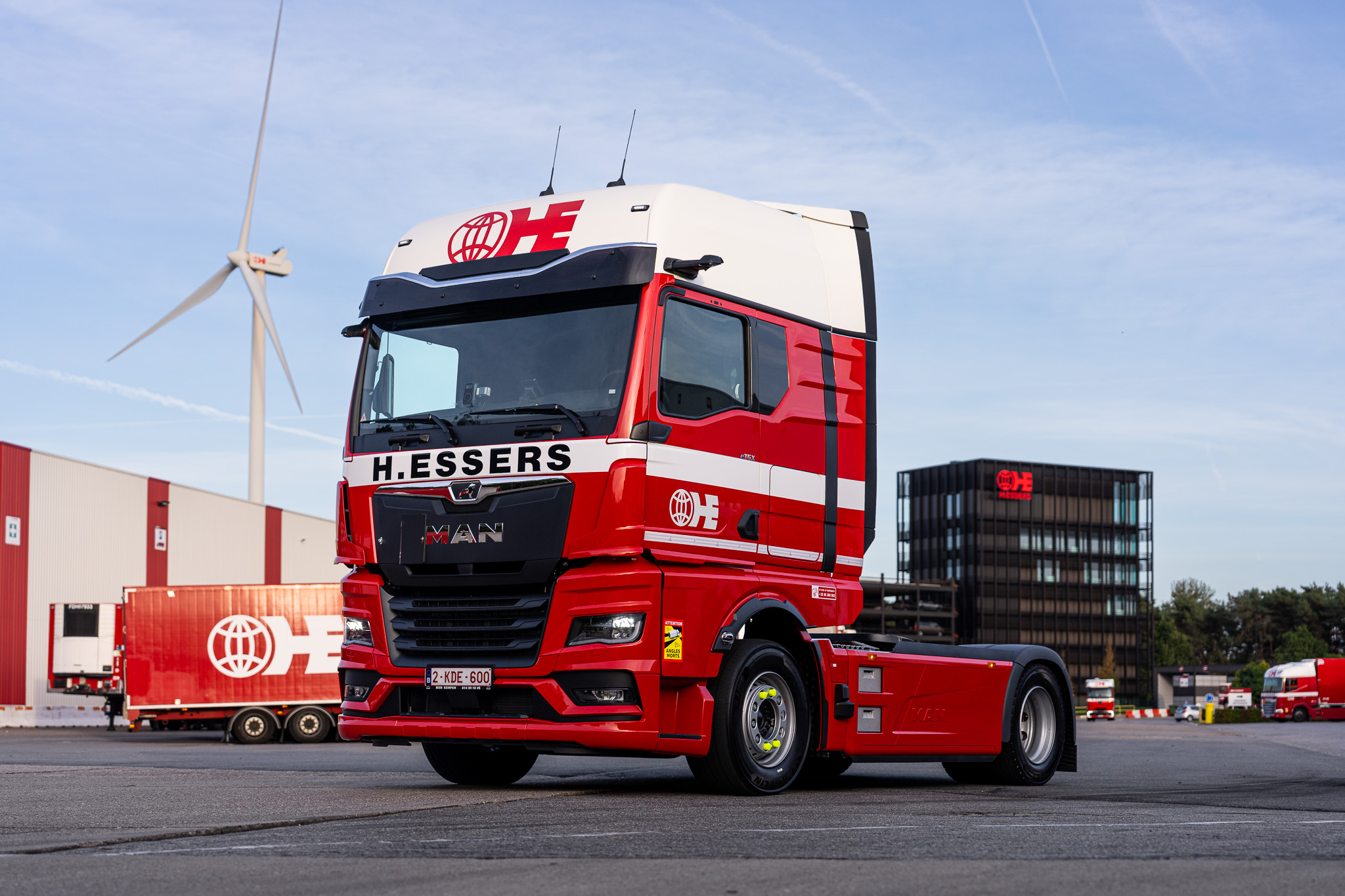
H.Essers acquires 20 electric trucks
With the recent addition of XXL electric trucks, H.Essers has expanded its fleet to a total of 31 vehicles of this type. The company describes its investment in electric trucks—alongside the expansion of charging infrastructure and energy supply—as part of its sustainability strategy. Specifically, H.Essers has set a goal to reduce greenhouse gas emissions from its own transport fleet by 42% by 2030. The logistics service provider aims to achieve its objectives effectively and efficiently by combining operational efficiency, synchromodal transport, renewable energy, and alternative fuels, including the electrification of its transport operations.
According to the company’s official figures, as of early 2025, H.Essers operated a fleet of approximately 1,420 trucks. A key milestone in the company’s sustainability strategy is to expand electrification to cover about 15% of its fleet by 2030, which would amount to approximately 200 units.
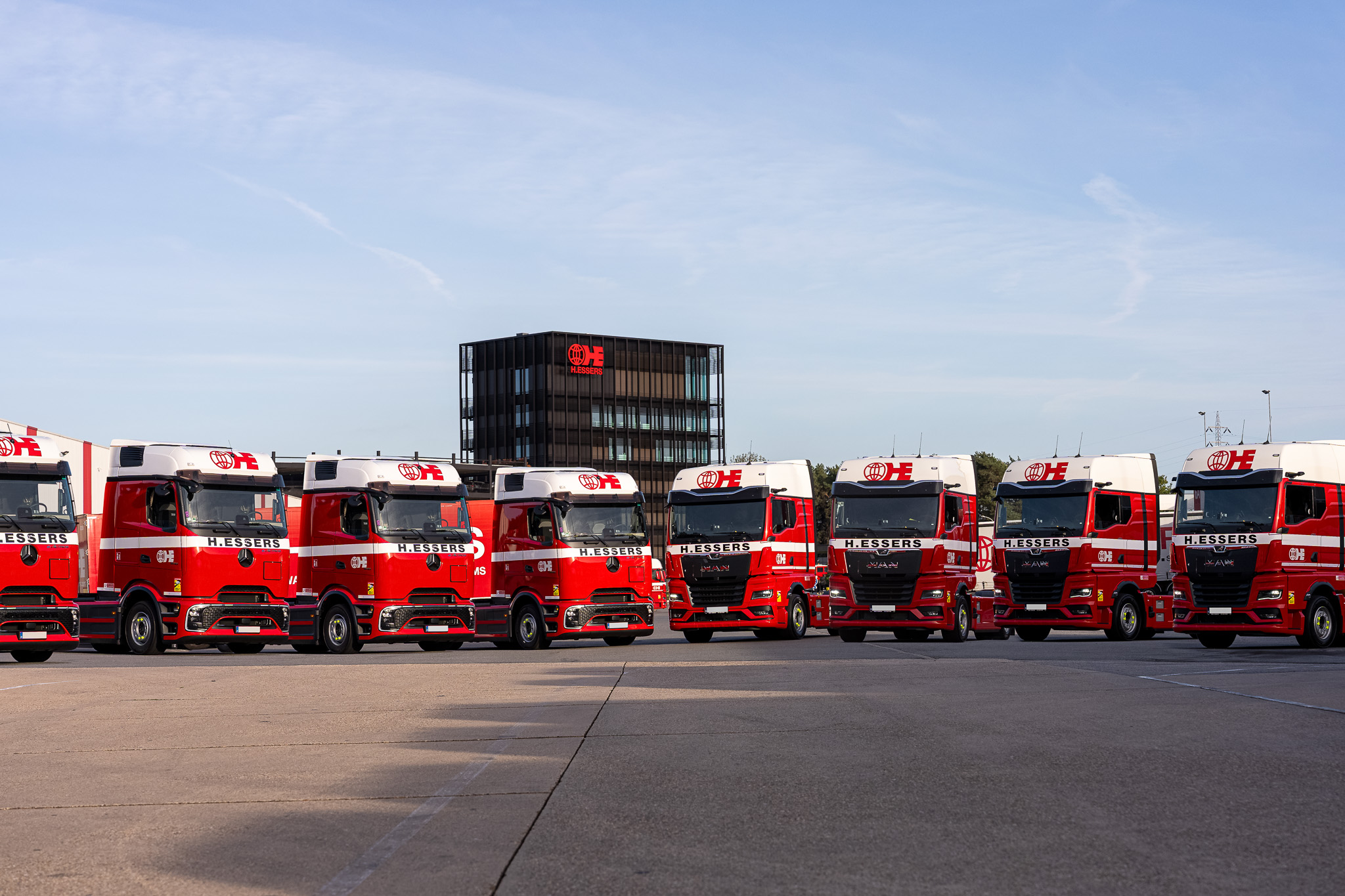
According to management, the decision to acquire 20 additional electric trucks is based on experience gained over the past year through a pilot project. During this trial, six electric trucks from three different manufacturers were used in daily operations. "This practical experience has provided H.Essers with a deeper understanding of both the opportunities and the challenges that electric transport presents in daily operations," the company stated.
According to the information provided, Mercedes electric trucks offer a range of between 525 and 575 kilometers, while MAN models have a range of between 400 and 450 kilometers. Thanks to their direct current (DC) charging capability, vehicles from both brands can be recharged in approximately 90 minutes under optimal conditions.
Christopher Van den Daele, Director of Transport Operations at H.Essers, commented: "Making logistics more sustainable requires a combination of solutions. In this regard, electric trucks play a crucial role and are becoming a viable option for an increasing number of applications. We believe that electrification is an indispensable component of the future of logistics." This expansion enables the deployment of electric trucks on a larger scale under real-world operating conditions. "In this way, we are not only gaining knowledge and experience, but also laying the groundwork for the further implementation of electric transport across our entire European network."
According to Van den Daele, this investment marks the beginning of the company's next phase of growth: while H.Essers' electric fleet currently operates primarily out of Belgium and the Netherlands, the company is evaluating the possibility of extending this technology to other countries and business areas. The insights gained from ongoing operations are expected to play a key role in this process.
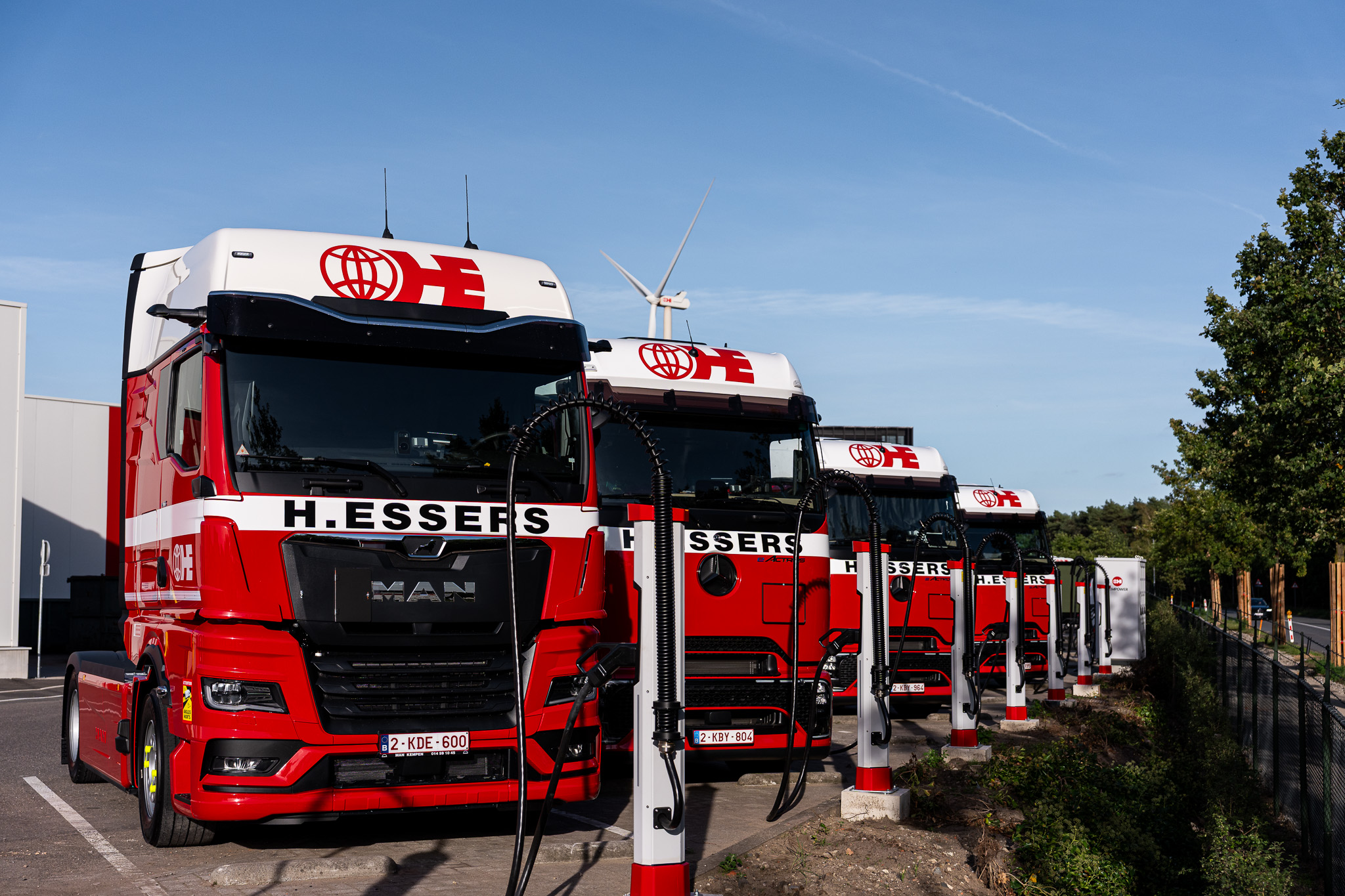
In addition to the electric fleet, charging infrastructure will also be expanded in the near future; H.Essers will increase its installed charging capacity at its facilities in Genk and Bergen op Zoom to 2.7 MW. Furthermore, the logistics service provider is investing in the electrification of forklifts and... ...passenger vehicles, as well as in heating and cooling systems for office buildings and warehouses.
Van den Daele added: “To intelligently manage the growing energy demand across our various facilities, we have also implemented Synchro Grid—a company-wide energy ecosystem that coordinates energy production, consumption, and storage. Our ambition is to transform our facilities into flexible energy hubs and support the further electrification of our operations, while meeting the increasing customer demand for more sustainable transport solutions. In this way, we are working together to build a more sustainable logistics chain.”