Fendt Deploys Longer Electric Trucks
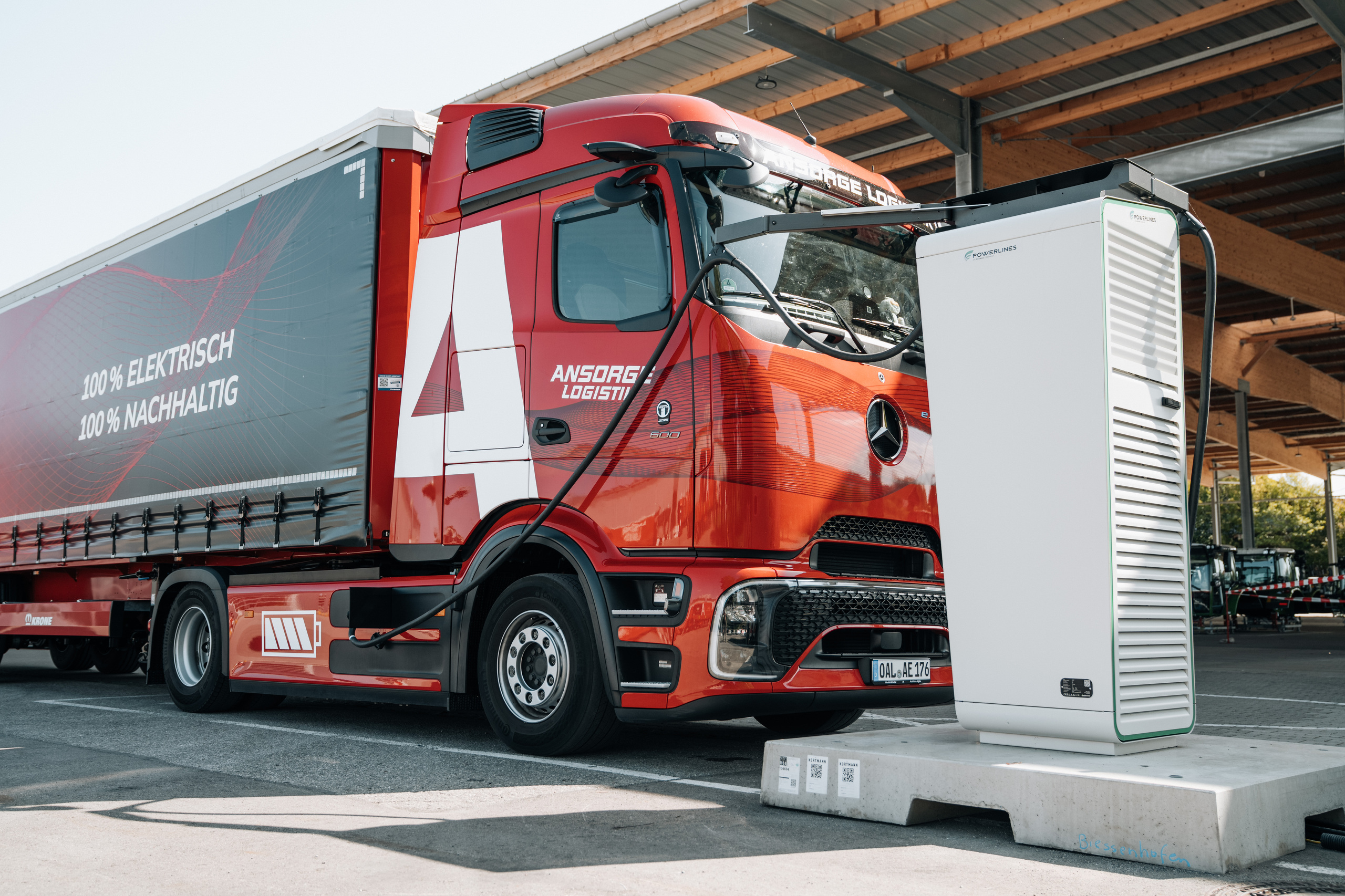
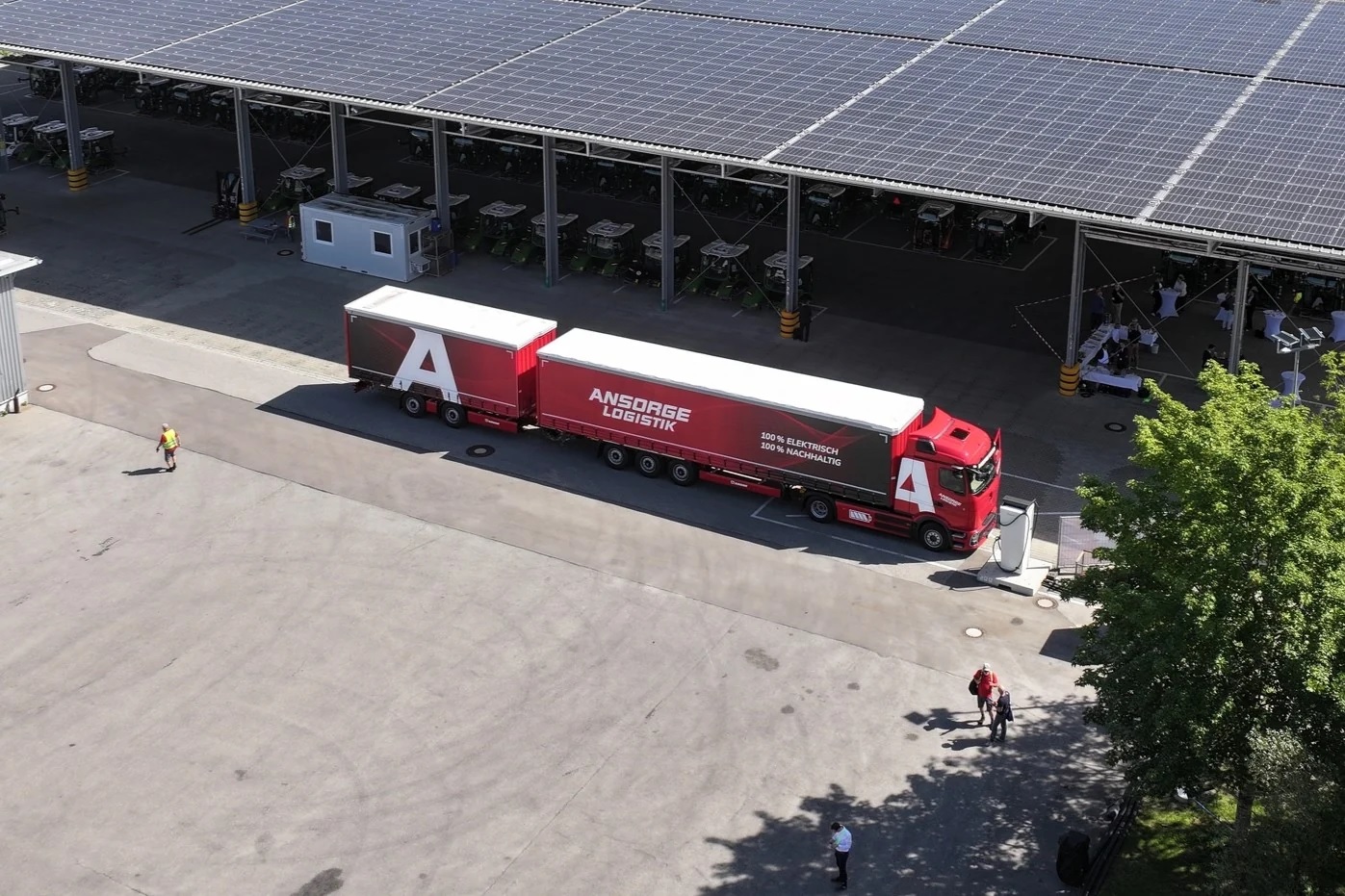
The Fendt brand, founded in 1930 in Marktoberdorf, Bavaria, is implementing an electrified transport system for tractor cabs between its plants in Asbach-Bäumenheim and Marktoberdorf. It is worth noting that this implementation is somewhat unconventional; most vehicle manufacturers typically use low-bed tractor units paired with extra-large "megatrailers" for their factory logistics. In contrast, Fendt’s solution involves the use of long-haul, fully electric trucks. In collaboration with the Allgäu-based transport service provider Ansorge Logistik, Fendt has replaced its older diesel trucks with modern, long-version Mercedes-Benz eActros 600 electric trucks.
Since last September, eight heavy-duty electric trucks—officially classified in German as "articulated vehicles with center-axle trailers, reaching a total length of up to 25.25 meters"—have been operating along the approximately 120-kilometer route connecting the two Bavarian sites, providing round-trip transport services. Fendt anticipates that this project will save around 280,000 liters of diesel fuel and approximately 740 tonnes of CO2 annually. The electrification of Fendt’s factory logistics aligns with the company’s product range. As early as 2017, Fendt—now part of the American group AGCO—unveiled its first battery-electric tractor. Currently, two electric tractor models are available on the market: the Fendt e100 Vario and the narrow-track Fendt e100 V Vario.
Fendt customers are feeling the effects of climate change.
"While it is true that sustainability is not currently receiving much public attention, our clients in the agricultural sector are experiencing the effects of climate change firsthand. The increase in extreme weather events—such as droughts, torrential rain, or localized storms—has a direct impact on their operations," states Dr. Jan Cachay, Managing Director of Production at Fendt. "Sustainability remains a core element of our corporate strategy. By implementing electrified transport for tractor cabs, we are achieving a significant reduction in emissions associated with our production logistics, marking a notable step toward more resource-efficient production."
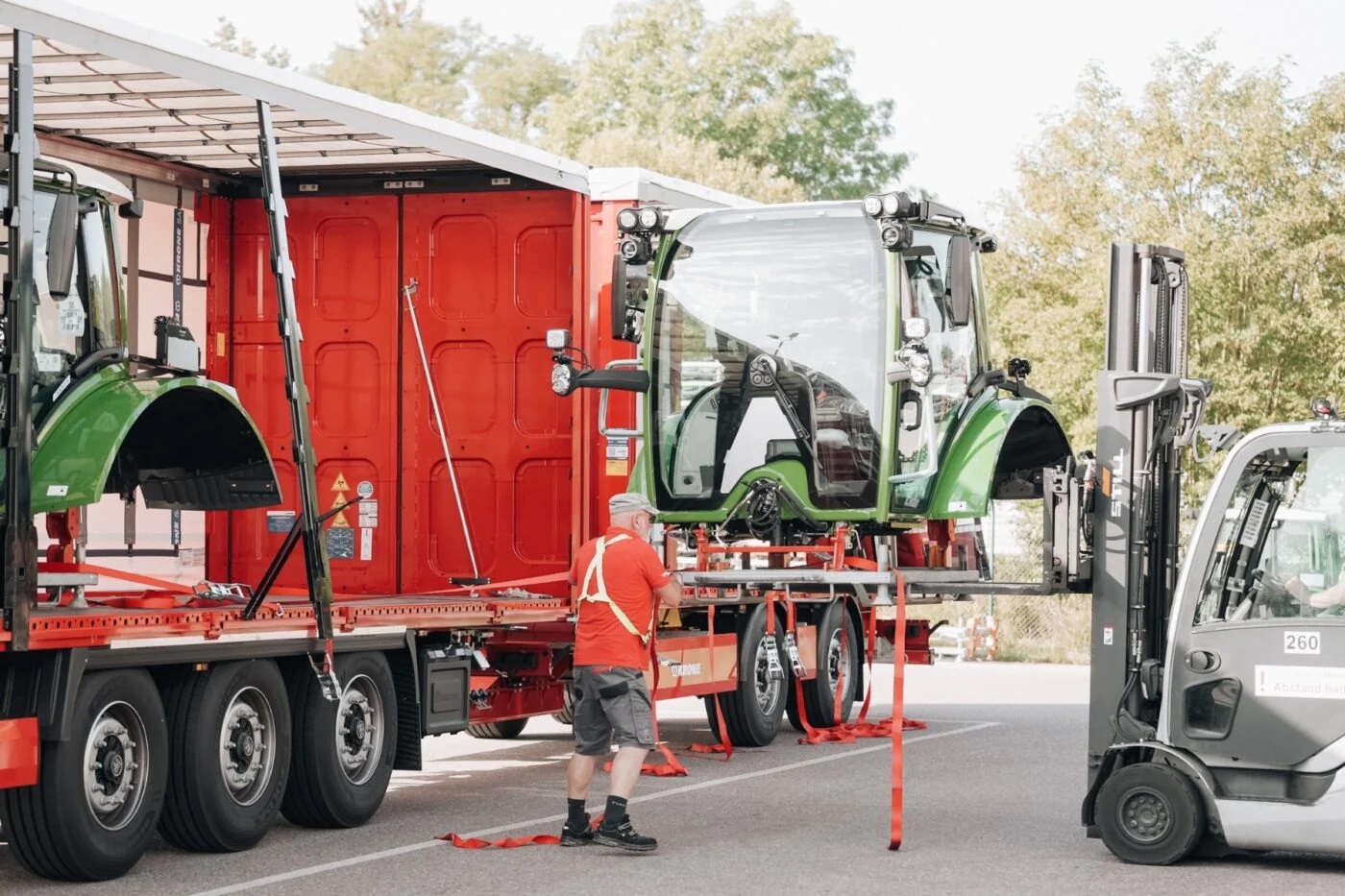
Ansorge Logistik operates eight eActros 600 tractor units, capable of hauling vehicle combinations with a total length of 25.25 meters and seven axles. An additional 7.70-meter trailer, attached behind a 13.60-meter semi-trailer, provides increased cargo volume. Depending on their size, these long, heavy-duty trucks can accommodate seven to eight tractor cabs, whereas a conventional semi-trailer can only hold four to five. Electric long-combination vehicles are not yet widespread; with the deployment of these eight units, the Ansorge fleet is likely the largest of its kind in Germany.
The primary objective of this additional transport capacity is to reduce the number of trips required. Fendt specifies a permissible gross vehicle weight of 40 tonnes for these units. After covering approximately 240 kilometers, the electric long-haul trucks are recharged at the Ansorge facility in Biessenhofen. According to Fendt, the estimated charging time is approximately 45 minutes. Ansorge utilizes renewable energy sources, including electricity generated by its own photovoltaic systems and battery storage units.
Positive signs after just two months.
Approximately two months after the launch, Ansorge CEO Benedikt Roßmann was asked to comment on the first practical experiences with electric long-haul heavy trucks. “In the case of factory traffic, the predictability of which is evident, the current good performance of electromobility in heavy road freight transport is evident,” explains Roßmann.
The round trip covers approximately 240 kilometers. According to Roßmann's testimony, the autonomy of the eActros 600, with a capacity of more than 500 kilometers, is more than enough to satisfy transportation needs. The necessary charging processes can be integrated into the driver's regular breaks. The provisional balance of energy consumption is equally favourable: long-haul electric trucks consume slightly more than an electric truck equipped with a standard trailer. The autonomy reserve remains at optimal levels even in unfavorable weather conditions or low temperatures.
Roßmann also sees potential economic benefits. Although both electric trucks and special heavy-duty trucks, as well as the necessary charging infrastructure, involve high investments, the electric truck currently has the advantage in terms of total cost of ownership thanks to toll exemptions and self-produced green electricity, especially in the case of high daily mileage and current high diesel prices. Added to this is greater transport capacity: «The fact that we can save up to 30% of journeys thanks to long trucks is another advantage. Every kilometer that does not have to be traveled due to greater transport capacity is still, from an ecological perspective, the best option.
According to Roßmann's analysis, widespread adoption by a larger number of customers is mainly hampered by regulatory barriers. The type 2 long trucks used can only circulate on duly authorized routes of the positive network. Furthermore, the permitted payload is limited to 18 tonnes, making this concept a particularly suitable solution for light and bulky goods. However, Ansorge is already exploring other possible routes. In the industrial and automotive sector, regular shuttle services are of particular interest. “We are pleased to report that there is a high probability of expanding the concept to a larger number of customers,” says Roßmann.
Longer trucks: greater length, but not greater weight.
In Germany, conventional truck sets are allowed to have a length of up to 18.75 meters. After a five-year test phase, which began in 2012 and in which Ansorge also participated with a diesel vehicle, as of 2017, long heavy-duty trucks with a length of up to 25.25 meters (OD) have been allowed to circulate. However, the authorized gross weight remains unchanged at 40 tonnes for ordinary traffic (or 42 tonnes for electric trucks) and at 44 tonnes for combined transport involving transfer to ships or trains.
It is important to note that vehicle types 2 through 5 are only permitted to travel on authorized routes within what is known as the "positive network." While transport companies may request additional routes, the standard authorization process can take between one and two years. Type 1 vehicles, by contrast, enjoy a privileged status: they can generally be used extensively across the authorized federal states—though not in Berlin. Authorization for Type 1 vehicles is currently limited to December 31, 2026, though it is likely to be extended.
Long-combination vehicles (LCVs) can offer significant advantages, particularly for bulky yet relatively lightweight cargo, such as Fendt tractor cabs. However, as previously mentioned, they are not permitted to exceed the weight limits applicable to conventional trucks in Germany. It is therefore important to note that the long-combination vehicles approved in Germany are not comparable to the 60-ton "gigaliner" models used in parts of Scandinavia.
Elflein uses longer electric heavy-duty vehicles (eHGVs) for two of its clients.
Elflein, a logistics company based in Bamberg that has been using electric trucks for some time, has recently put its first long-combination electric heavy-duty vehicle into service. According to the company, a fully electric vehicle from the Swiss manufacturer Designwerk was integrated into its long-haul transport operations on September 1, connecting Gera to an automotive plant in Zwickau. Operating on a two-shift system, the vehicle is expected to complete up to four round trips per day. The one-way distance is 39 kilometers.
According to Elflein’s analysis, this vehicle configuration has the capacity to carry approximately one-third more cargo than a conventional truck. With four round trips, the company estimates that direct carbon dioxide emissions are reduced by approximately 226 kilograms for every day of operation. The initiative—initially scheduled for launch in late 2026—is primarily aimed at gaining experience in integrating long-haul electric heavy-duty trucks into existing transport operations.
It should be noted that this is not the only project of its kind at Elflein. Marco Schubert, the logistics company’s head of electromobility, stated to *Electrive*: "We currently have four long-haul electric trucks in regular service." The other three vehicles have been operating for an automotive supplier for a period ranging from six to nine months. The company transports goods from its facilities in Schierling, near Regensburg, to an automotive plant in Leipzig—a one-way distance of approximately 360 kilometers. An exchange point in Hermsdorf, where Elflein operates its own charging infrastructure, along with an additional charging station at the supplier’s site, ensures the electric long-haul trucks remain powered. The three MAN eTGX trucks complete three daily trips according to a set schedule.
According to Marco Schubert, the experience with these vehicles has been remarkably positive. The energy consumption of such vehicles is particularly noteworthy; specifically, the claim that a heavy-duty electric truck consumes twice as much energy is incorrect. "The additional consumption remains within reasonable limits," says Elflein’s head of electromobility. The energy consumption for a standard electric tractor unit typically falls within the range of 1.0 to 1.1 kWh per kilometer. In contrast, the energy consumption of an electric long-haul truck ranges from approximately 1.2 to 1.3 kWh, according to its technical specifications. This figure can be influenced by various factors, such as the load, the route profile, and weather conditions. Consequently, the additional length has a smaller impact than initially assumed. Furthermore, these vehicles have the capability to recover some energy through regeneration on downhill sections.
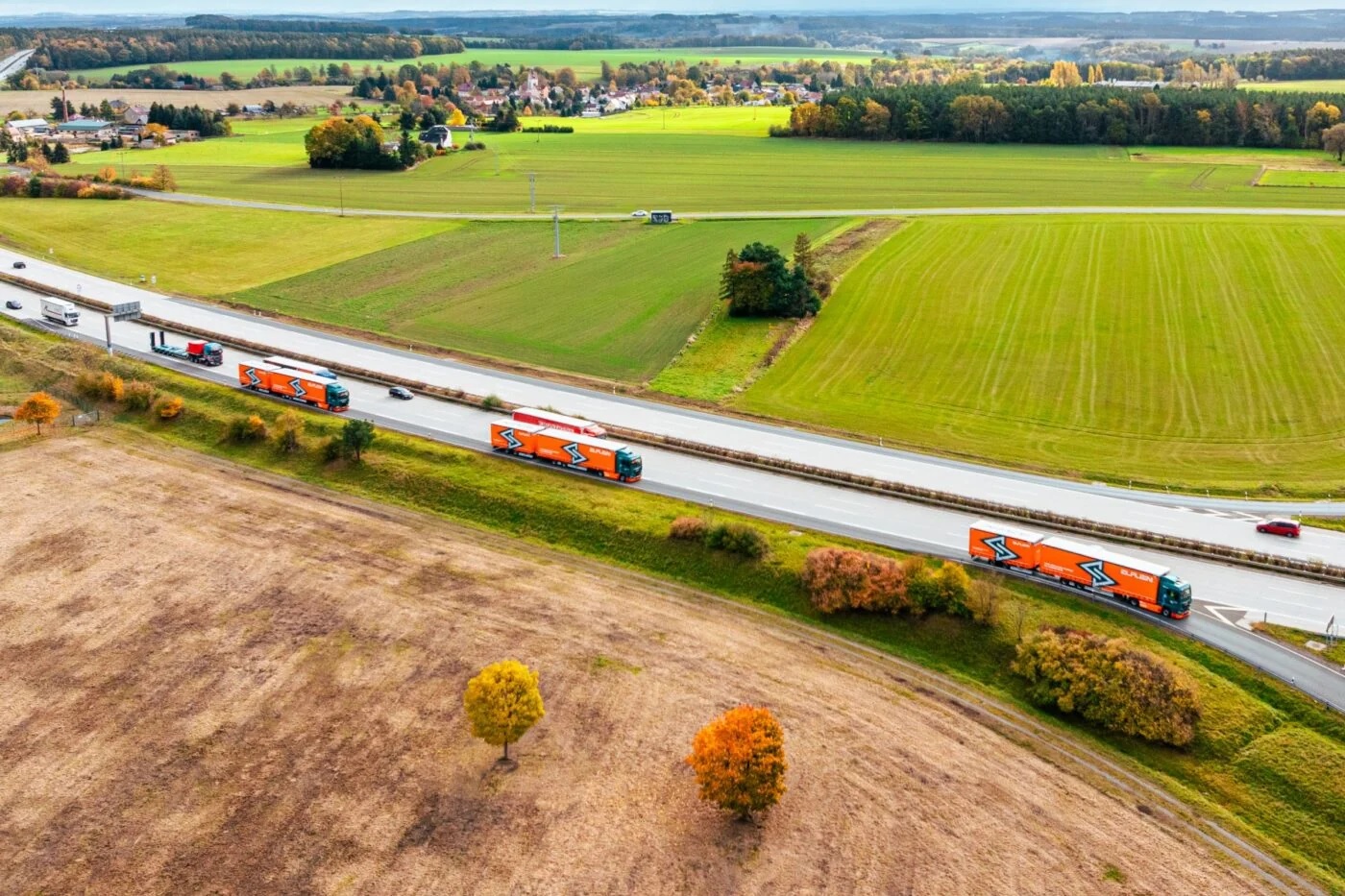
Charging on long-haul routes at dedicated HPC (High-Power Charging) stations.
Elflein has developed practical charging solutions. On the route from the original equipment manufacturer (OEM) to Zwickau, the full vehicle combination cannot access the public charging station operated by Aral Pulse in Gera. Consequently, the trailer is left at the supplier’s facility, while the electric tractor unit proceeds to the charging station on its own. After approximately one hour of charging, the driver reattaches the trailer. "We have utilized the driver’s standard rest period for this. It works perfectly," reports Schubert. Regarding the second route, as previously mentioned, charging points specifically set up at the supplier’s facility and at the exchange point allow for the seamless integration of charging processes into transport operations.
Transport services to the automotive plant in Leipzig present significant challenges, as the goods are essential for supplying the vehicle production line. As a result, buffer stocks are limited. "It is important to note that the parts do not necessarily go directly into production; however, the on-site buffer stock only lasts for about six hours. This is, of course, a very tight schedule that leaves no room for error," explains Schubert. He believes that the fact that long-haul electric trucks operate reliably even under such conditions is a positive sign for future deployments. Elflein currently has 19 electric trucks in operation, with two or three additional units expected to be added before the end of the year.
DHL deploys heavy-duty electric long-haul trucks in Sweden.
Another case illustrating this trend can be found in Sweden. At this location, WLX WeLink Express operates a Mercedes-Benz eActros 600 vehicle for DHL. According to Daimler Truck, the vehicle combination measures 25.25 meters in length, features seven axles, and has a gross weight of 36 tonnes. The company operates five days a week across two routes connecting Malmö, Jönköping, and Emmaboda, covering a total of more than 1,000 kilometers per day. Operations are conducted on a two-shift system, with the vehicle being recharged during the drivers' scheduled breaks. Daimler Truck states that the eActros 600 offers a range of approximately 500 kilometers under real-world conditions, without the need for intermediate recharging. This deployment in Sweden demonstrates the viability of electric trucks for long-distance daily operations, provided that routes are carefully planned and charging opportunities are managed efficiently.