

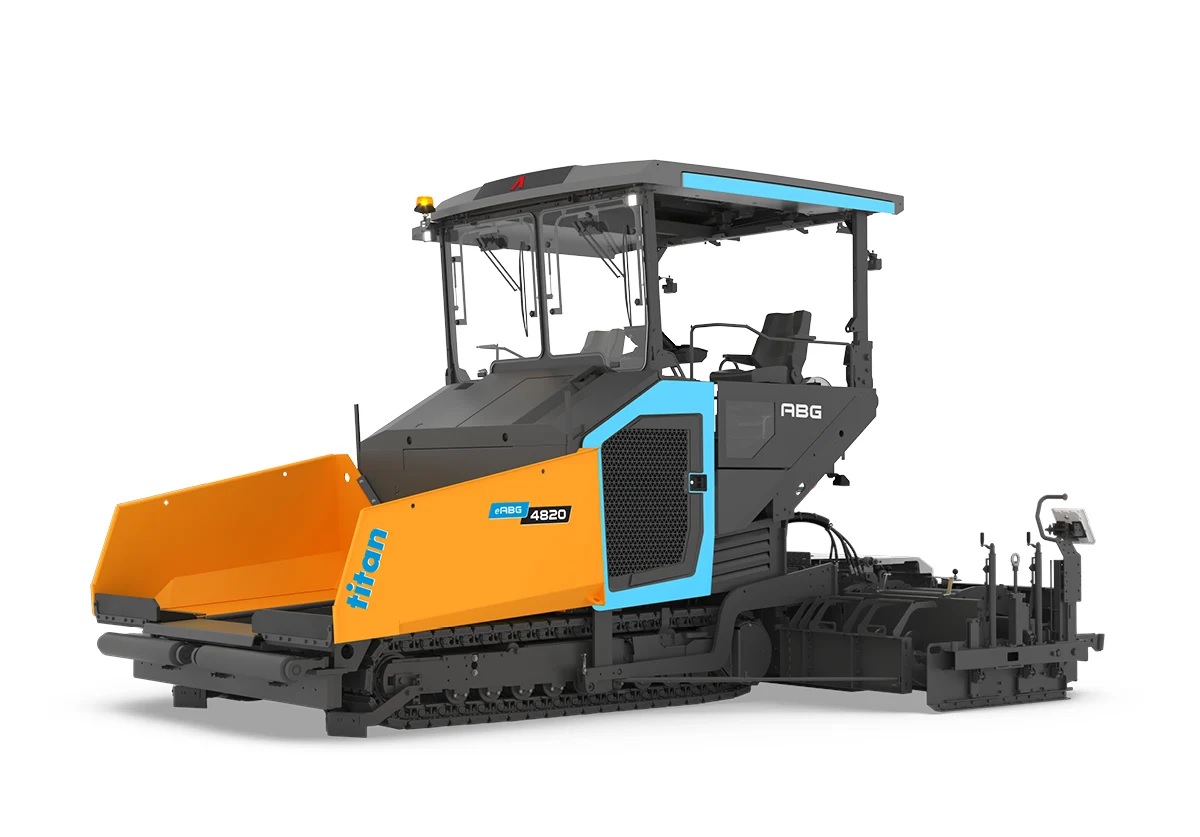
Ammann and Volvo Penta Develop an Electric Asphalt Paver
The electrification of construction machinery is expanding within the road construction sector. In addition to electric excavators, wheel loaders, and dump trucks, fully electric asphalt pavers are now available, demonstrating the technological progress in this field. One such model has been developed by Ammann—a Swiss company specializing in road construction machinery—in collaboration with the Swedish powertrain manufacturer Volvo Penta.
The fully electric road paver, the eABG 4820, is based on Ammann’s diesel-powered ABG 4820 model. It is designed to demonstrate that even high-performance road construction applications can operate without an internal combustion engine.
270 kWh Battery for Road Construction.
At the heart of the eABG 4820 is a high-voltage system supplied by Volvo Penta, featuring a battery capacity of 270 kWh. The energy is stored in three modular battery units. The powertrain is equipped with a permanent magnet synchronous motor (PMSM) with a rated power of 99 kW. The electrical system operates at a voltage of 600 volts.
Recharging is carried out using a CCS2 connector. According to the technical specifications, the unit supports DC fast charging at up to 150 kW, allowing the battery to be recharged in approximately one and a half hours. Alternatively, it can be charged via AC power at up to 22 kW, which results in a charging time of about twelve hours. In terms of performance, the electric paver is comparable to conventional machines, according to Ammann, which notes a theoretical paving capacity of up to 500 tons of asphalt per hour. The paving width ranges from 2.5 to 6.5 meters, depending on the screed, with a maximum paving thickness of 300 millimeters. The operating weight of the machine, excluding the screed, is approximately 13.8 tons.
According to Ammann, the eABG 4820 has set a new daily record for the largest amount of asphalt laid by an electric asphalt paver. Information provided by the manufacturer on its website indicates a daily production capacity of 1,200 tons. Furthermore, it is worth noting that this electric asphalt paver is not a one-off prototype; it is currently available for customers to order.
Less noise and lower CO2 emissions.
In addition to its zero-emission operation at the point of use, Ammann highlights the machine’s low noise levels—a significant advantage for road construction projects in densely populated areas. Volvo Penta specifically cites urban streets, bicycle paths, and construction sites near residential or commercial buildings as potential applications. Reduced noise levels also facilitate better communication between the machine operator and the rest of the paving crew.
Ammann estimates that using this machine, rather than a conventional model, reduces carbon dioxide emissions by approximately 70%. While the paver itself operates with zero emissions, its actual carbon footprint also depends on the composition of the power grid. The electric powertrain technology was developed by Volvo Penta, a company that is expanding its focus on electric propulsion systems for industrial applications.
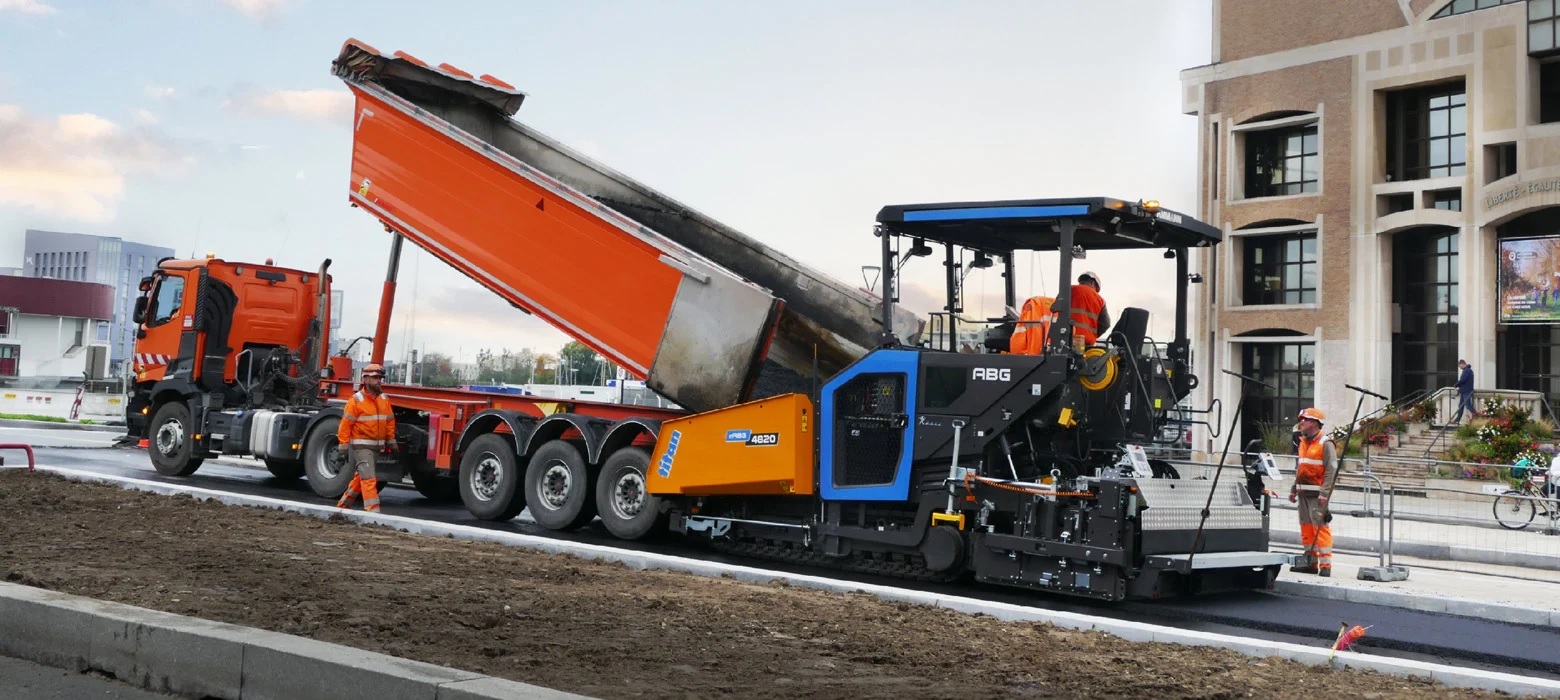
Dynapac is also betting on electric pavers.
It is worth noting that Ammann is not the only company with an electric paver—the eABG 4820. The Swedish construction machinery manufacturer Dynapac, S.A. also unveiled an electric paver at the Bauma 2025 trade fair in Munich, Germany. The SD25 80C model is equipped with five electric motors, delivering a combined power output of 235 kW. It also features a 294 kWh battery, which should allow the machine to operate continuously for up to eight hours. The maximum DC charging capacity via the CCS standard is 235 kW.
In 2022, Dynapac introduced a smaller, fully electric road paver, the SD1800W e. These examples demonstrate that electrification is currently being applied to energy-intensive machinery used in road construction. The reduction in noise levels and emissions could serve as a compelling argument for adopting electric alternatives, particularly within the urban construction sector.