
Ford analyzes 36,000 batteries from its first electric car
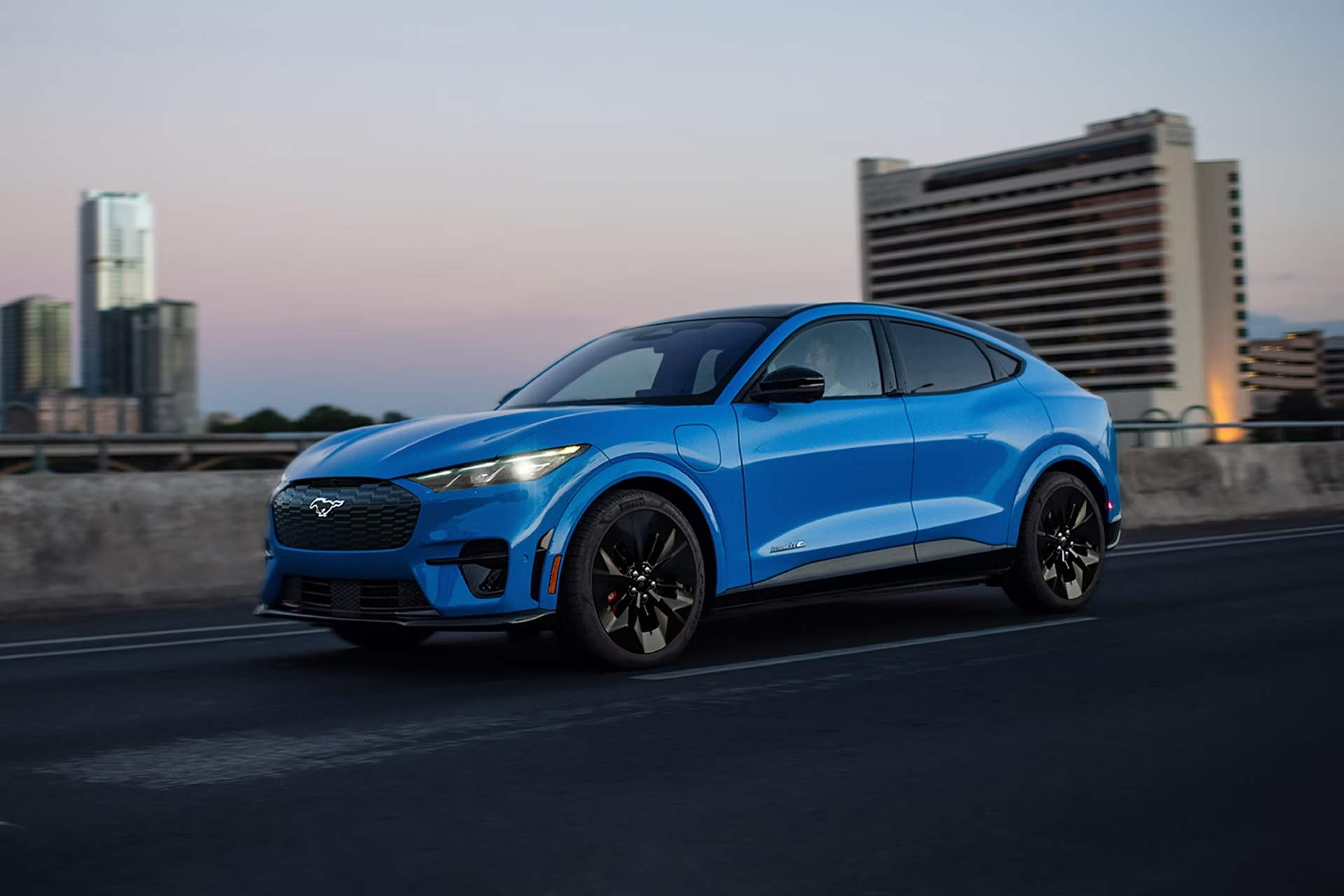
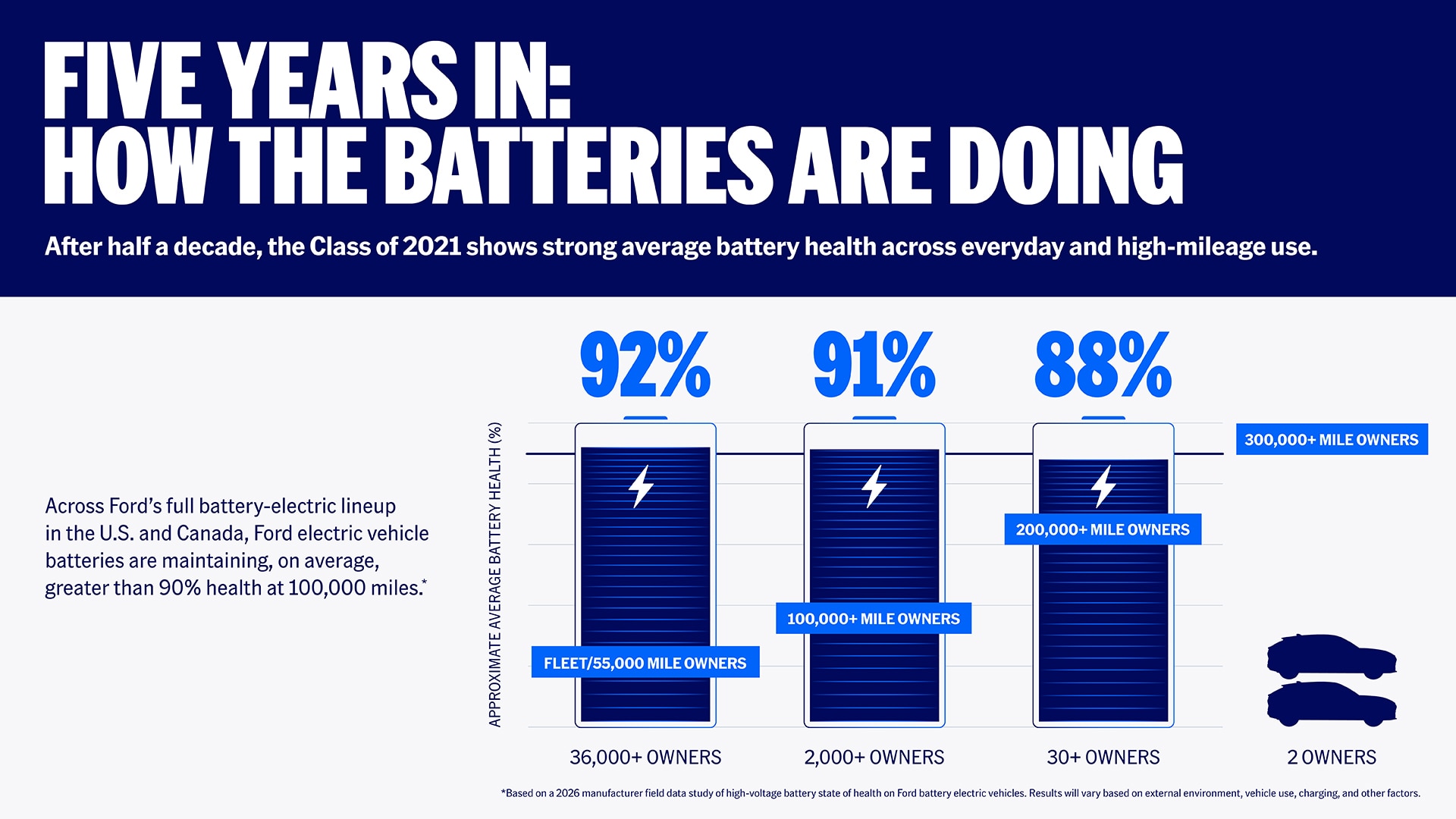
More than five years after delivery to their owners, the batteries in the Ford Mustang Mach-E—the first electric SUV the company designed from the ground up—retain an average usable capacity of 92%. This finding comes from an exhaustive analysis conducted by the brand itself, using data from over 36,000 first-generation (2021) units sold in the United States and Canada, which together have covered more than 3.2 billion kilometers.
Battery degradation remains a primary concern for those considering the purchase of an electric vehicle; many fear that performance will decline over time—much like the batteries in mobile phones, which often last only a few years. However, the data provided by Ford suggest otherwise.
Five years of real-world use with NCM batteries.
With 92% of its original capacity, the 2021 long-range version—equipped with a larger battery and a 294 hp rear-wheel-drive powertrain—would, in theory, see its range drop from the 491 kilometers certified under the U.S. Environmental Protection Agency (EPA) cycle to approximately 450 kilometers. All the vehicles analyzed are equipped with nickel-cobalt-manganese (NCM) batteries, with gross capacities of 76 kWh and 99 kWh. It is worth noting that Ford did not introduce lithium iron phosphate (LFP) battery technology to the Mach-E model until 2023.
Ford conducts rigorous laboratory testing during the early stages of vehicle development. Nevertheless, the most significant evaluation takes place over years of actual use, which makes it possible to determine the product's reliability and performance under real-world conditions. "The ratings have been provided to us gradually, and we currently have data for vehicles that have been in use for five years. Their quality is exceptional," states Kevin Vander Laan, the brand’s technical lead for high-voltage batteries.
More miles, nearly the same level of wear.
It is worth noting that vehicles with higher mileage show almost no disadvantages compared to newer models. Based on the analyses conducted, it can be concluded that the more than 2,000 Mach-E vehicles with over 160,000 kilometers (approx. 100,000 miles) retain more than 91% of their capacity, while the thirty-plus vehicles that have exceeded 320,000 kilometers (approx. 200,000 miles)—such as the one owned by David Blenke—still maintain 88% capacity. This performance is not limited to this specific model; Ford states that, on average, all of its electric vehicles retain more than 90% of their charging capacity over 160,000 kilometers. Furthermore, the batteries in these vehicles are designed to remain functional for at least ten years.
Additionally, the results show a significant clustering: 95% of the 36,000 Mach-E vehicles have a battery health level between 87% and 97%. It should be noted that these are averages. Rising temperatures—such as those recently experienced in the Southwestern United States—can accelerate cell degradation. This process is similar to the frequent use of maximum-capacity fast charging, which can damage the battery by subjecting it to extreme charge levels, rather than keeping it within a healthy range of 20% to 80%.
What other studies say.
Ford’s figures align with those from other companies. According to estimates by Recurrent—a firm specializing in tracking the range of pre-owned electric vehicles—a mid-range electric car retains 97% of its original driving capacity after three years, and 95% after five years.
In September, the Austrian diagnostic company Aviloo published the results of an extensive study based on 500,000 battery tests. At 150,000 kilometers, most models fell between 90% and 94%, with the Hyundai Ioniq 5, BMW i4, and Mercedes EQA ranking at the top. The Mach-E scored 92.5%—a figure close to the 92.8% reported by Ford—placing it ahead of the Tesla Model 3 (88.9%) and the Tesla Model Y (90.3%).
Ford’s recommendations and what lies ahead.
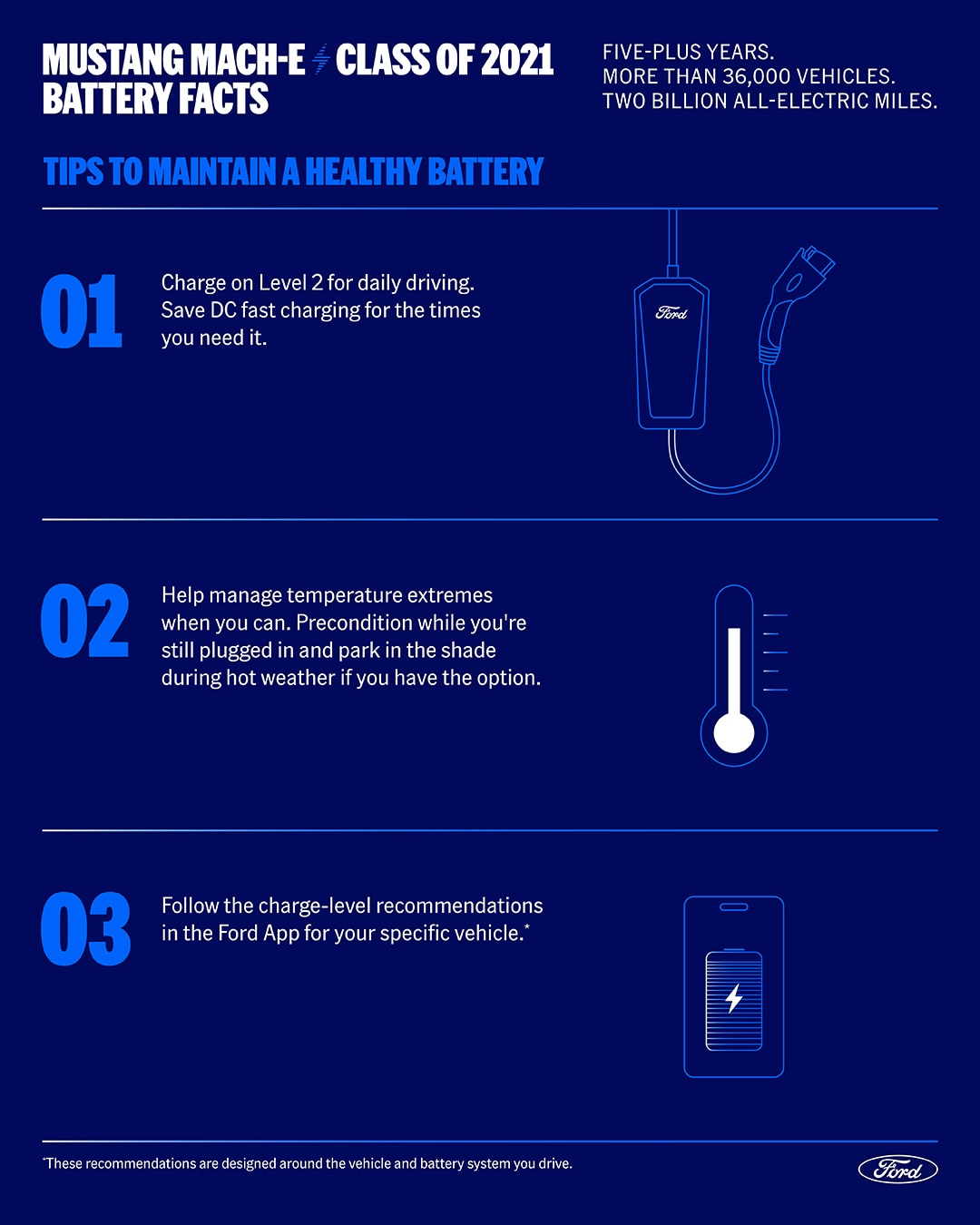
The brand recommends parking in the shade during hot weather, preconditioning the cabin while the vehicle is plugged in, charging daily using alternating current (AC)—for instance, via a home wallbox—and reserving direct current (DC) fast charging for long-distance travel.
The insights gained from the Mustang Mach-E will also be applied to the development of Ford’s future electric vehicles, starting with the "Fathom"—a mid-size pickup truck set to enter the U.S. market next year with a price tag under $30,000 (approximately 26,800 euros). Following a comprehensive analysis of five years of data, the battery does not appear to be a weak point in Ford’s early electric vehicles. However, the aging of versions using LFP (lithium iron phosphate) battery chemistry—which have been on the road for a shorter period—remains to be evaluated.