
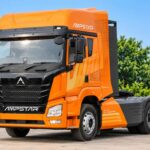
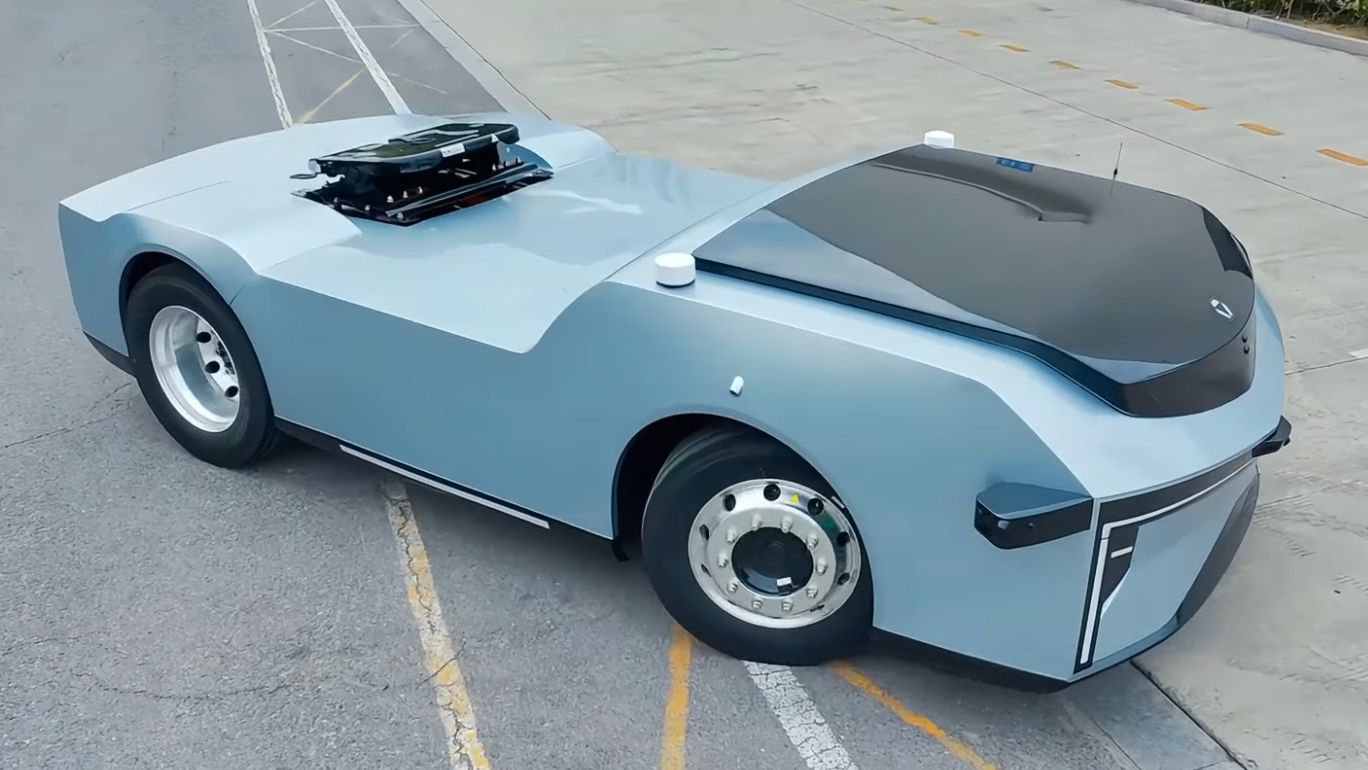
Meet the XCMG "SDA411"—a Level 4 autonomous electric truck
The electrification of heavy-duty transport is giving rise to increasingly remarkable vehicles. While traditional manufacturers focus on transitioning from diesel engines to electric powertrains, some Chinese companies are leveraging this transformation to completely redesign their industrial vehicles. A notable example is XCMG, one of China’s leading heavy machinery manufacturers, which recently unveiled an autonomous electric truck—one that lacks a cab entirely.
The vehicle, dubbed the XCMG SDA411, is currently in the prototype stage and has been designed to carry out logistics operations autonomously. Its primary application is the transport of trailers within ports, freight terminals, and industrial sites—environments where such vehicles frequently perform short-distance trips and precise maneuvers. The company has shared a video on its official LinkedIn profile showcasing some of the vehicle's capabilities, including autonomous navigation, emergency braking, and autonomous travel to a charging station.
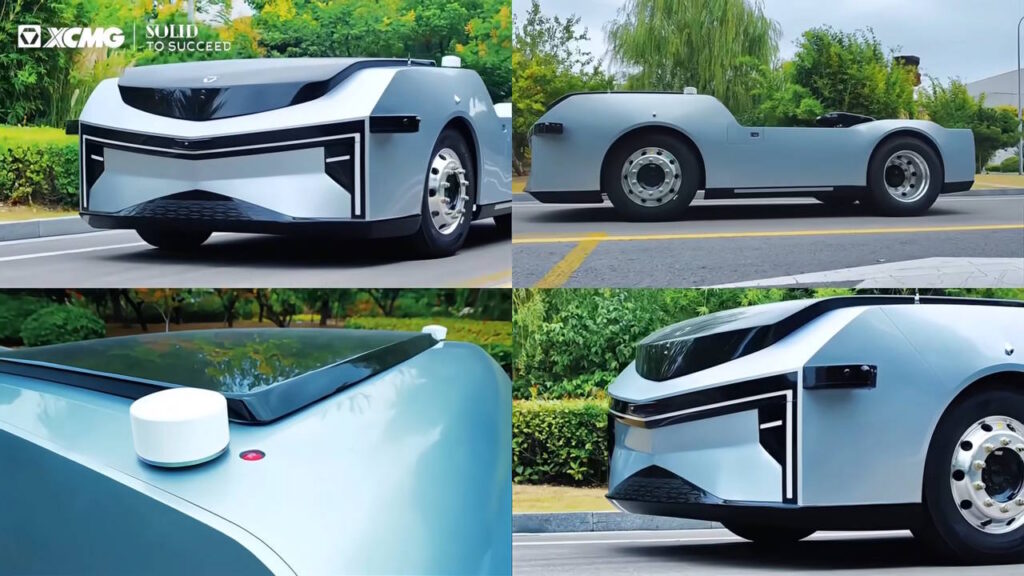
A Level 4 electric truck that dispenses with the cab.
The most striking feature of the SDA411 is the absence of a conventional cab. Unlike standard trucks, which require space for a driver and control equipment, this prototype was conceived from the outset for autonomous operation. This compact, specialized configuration allows for greater efficiency when transporting trailers.
To achieve this, XCMG has integrated a Level 4 autonomous driving system, enabling the vehicle to perform all driving functions independently and safely—within the specific parameters and designated areas for its operation. In this case, its design is tailored for controlled logistics environments, rather than for free movement on public roads open to general traffic. The manufacturer explains that the SDA411 features a 360-degree perception system capable of analyzing everything happening around it.
Thanks to this technology, the vehicle can navigate autonomously, detect and avoid obstacles, carry out assigned tasks, and park without the need for human intervention. Furthermore, XCMG asserts that its system is designed to operate in demanding environments where other vehicles and machinery are also in motion. This capability is particularly relevant in ports and logistics centers, where loading and unloading operations take place in shared spaces alongside trucks, forklifts, and personnel.
It already operates autonomously, though it still requires assistance for recharging.
The company accompanied the presentation with a video filmed at its own facilities. The footage shows the SDA411 moving autonomously around the site, performing various maneuvers, and coming to a stop when emergency braking is required. Another sequence shows the vehicle approaching a charging station; however, although the truck reaches the charger without a driver, a person is still required to physically connect the charging cable. Therefore, the autonomy demonstrated applies to driving operations, excluding the comprehensive tasks necessary to keep the vehicle operational.
Additionally, the choice of a fully electric powertrain offers distinct advantages. Terminal trucks typically travel relatively short distances at moderate speeds, while requiring high torque to handle large, heavy loads. These operational characteristics are well-suited for electric propulsion, which provides immediate power delivery and eliminates exhaust emissions during use.
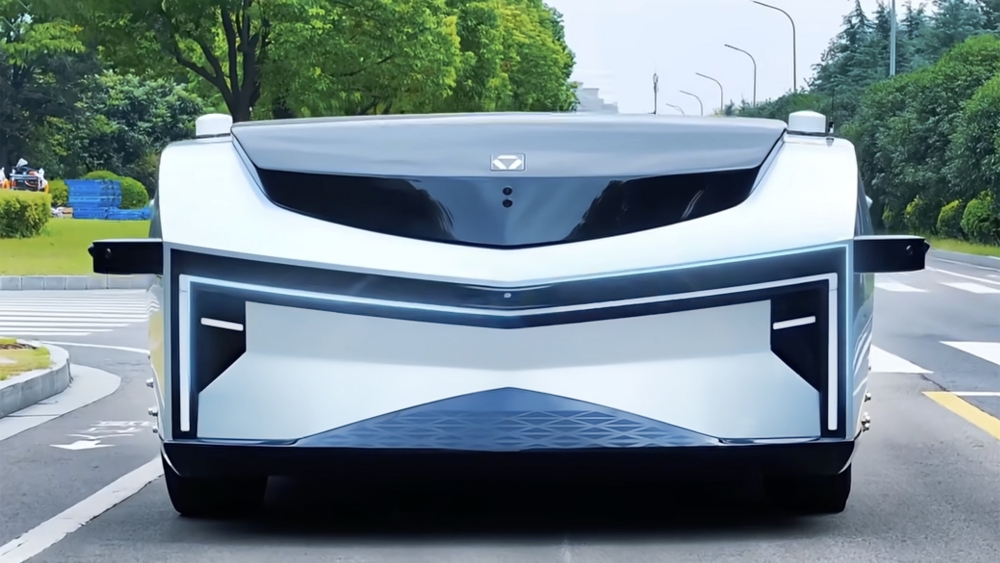
Much information about this electric, autonomous truck remains undisclosed.
At present, XCMG has not released details regarding the vehicle's motor power, battery capacity, operating range, or maximum payload capacity for the SDA411. Furthermore, no specific date has been set for the start of the series production. The company has demonstrated its expertise in the field of electric and autonomous heavy machinery, including mining trucks and industrial vehicles equipped with battery-swapping systems.
The SDA411 represents a significant advancement in this regard, although its full functionality in actual commercial operations has yet to be demonstrated. Beyond its unconventional design, this prototype signals a major evolution in the field of freight transport within enclosed spaces. Rather than simply electrifying conventional trucks, manufacturers like XCMG are developing machines capable of operating without a driver—with an entire architecture adapted specifically for that purpose.