

HMD Trucking Acquires 50 Tesla Electric Trucks
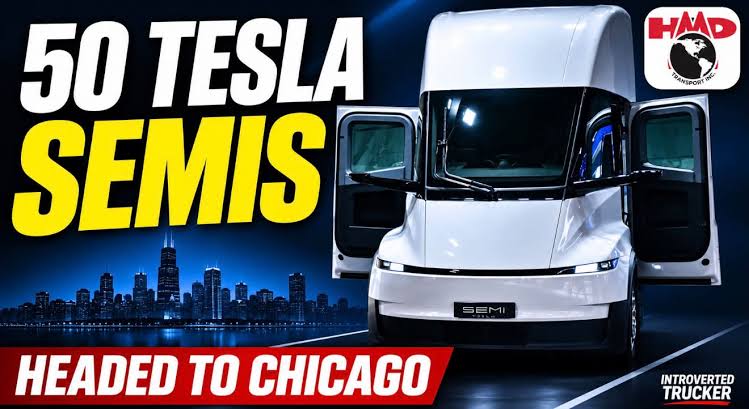
Following an extended period of delays, testing, and assurances regarding its potential to transform heavy-duty transport, the Tesla Semi is entering a significant phase toward large-scale commercialization. The American manufacturer has announced the shipment of 50 of its electric trucks to Chicago, fulfilling the plans of a transport company that—after three decades of operating primarily with diesel-powered vehicles—is now committing to the electrification of its fleet.
This information was shared on November 11 via the official Tesla Semi account on the social media platform X. The manufacturer posted a photograph of four electric trucks, accompanied by a message confirming that the first 50 Tesla Semis destined for Chicago were en route for delivery. Although the company did not explicitly name the recipient, the announcement aligns with a substantial order placed by a transport firm based in that city.
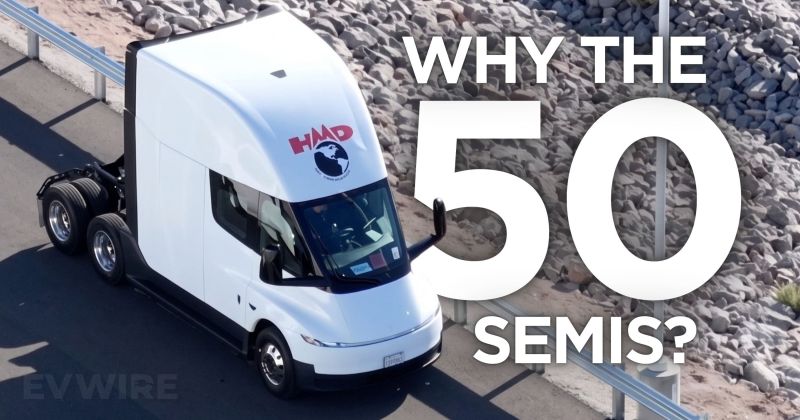
HMD Trucking is a family-owned business founded in 1998, currently operating a fleet of 650 to 700 trucks, most of which are equipped with diesel engines. The company, which began operations with just a single vehicle, has grown significantly to become a well-known logistics operator in the United States. Now, after nearly 30 years in business, it has made the strategic decision to incorporate 50 Tesla Semis into its operations—a deal with an estimated value of around $15 million (approximately €13.6 million). This figure is based on an approximate price of $300,000 per vehicle and has not been officially confirmed by the company.
In fact, HMD Trucking confirmed that it received its first unit on November 2, making it—according to the company itself—the first Tesla Semi to be registered in Illinois. The company had ordered 50 electric trucks in September, with the expectation of receiving them before November 15. However, no public confirmation has been issued regarding the full delivery of these units.
A company with nearly 700 diesel trucks bets on Tesla.
Before placing the order, HMD Trucking decided to verify the actual capabilities of Tesla’s electric truck. During the summer, the company conducted a testing program in which a Tesla Semi covered more than 6,400 kilometers, recording an average consumption of 1.74 kWh per mile—equivalent to approximately 108 kWh per 100 kilometers. This result is very close to the 1.7 kWh per mile figure officially announced by the manufacturer.
Michael Mahler, Director of Operations at HMD Trucking, stated that the experience with the vehicle was satisfactory and that Tesla maintained transparent communication regarding its capabilities throughout the evaluation process. According to the executive, the company was particularly impressed by the truck’s ease of handling and its acceleration. Additionally, while the drivers needed some time to adjust to the centrally positioned seat, they responded positively to its comfort and the vehicle's overall performance.
The first Tesla Semis added to the fleet will primarily be used for freight transport operations within the Chicago metropolitan area. The company plans to cover approximately 640 kilometers per day, with the goal of gradually expanding these routes as more high-power charging stations become available. In this way, HMD Trucking aims to determine whether electric trucks can take on some of the workload currently handled by its diesel-powered vehicles.
Another particularly significant factor is how the trucks perform during the winter. Chicago experiences very low temperatures and heavy snowfall—conditions that could potentially compromise the range of electric vehicles. Mahler suggests that preconditioning the battery and the cabin can offer an advantage in overcoming certain starting issues that diesel engines may face in extreme temperatures. However, it is important to note that the actual loss of range will depend on the load being carried, the specific characteristics of each route, and individual driving habits.
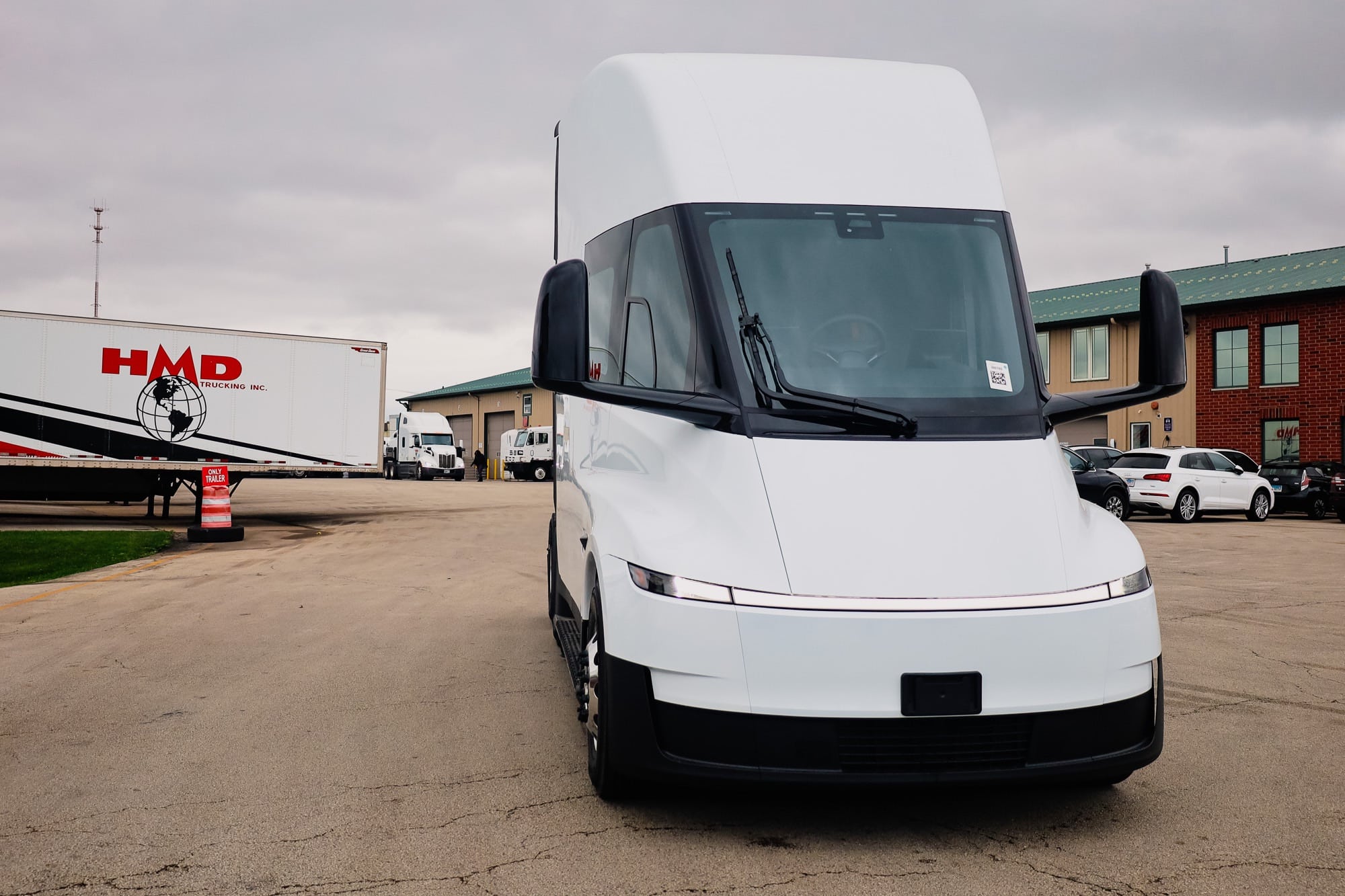
Up to 800 kilometers of range.
The Tesla Semi has been designed to compete with traditional heavy-duty trucks in medium- and long-haul logistics operations. According to the manufacturer’s technical specifications, the long-range version can travel approximately 800 kilometers on a single charge, while the entry-level variant offers a range of around 523 kilometers. These figures are estimates that may vary based on factors such as temperature, speed, and load weight during actual use.
The company has highlighted its high-power charging system, which features a capacity of up to 1.2 MW and can recover 60% of the vehicle's range in 30 minutes. This technology is crucial for minimizing downtime for electric trucks, though its effectiveness depends on the availability of suitable infrastructure. HMD Trucking intends to initially utilize public "Megacharger" stations, with plans to later develop its own charging facilities to support its fleet.
The rollout of these vehicles coincides with a new industrial phase for Tesla. Following several delays, the manufacturer began volume production of the Semi in September at its facility in Sparks, Nevada. The factory is designed for an annual capacity of 50,000 electric trucks—a figure representing its production potential rather than its current output. Furthermore, Tesla does not separately disclose the total number of Semi trucks produced and delivered to customers.
HMD Trucking’s operations provide an opportunity to evaluate the performance of these vehicles within a fleet that has historically relied primarily on diesel. In addition to analyzing energy consumption, the company will be able to assess maintenance costs, charging times, and operational performance during the colder months of the year. The true challenge for the Tesla Semi will be demonstrating its ability to deliver competitive profitability compared to conventional trucks—not just in controlled tests, but over years of intensive, real-world use.