
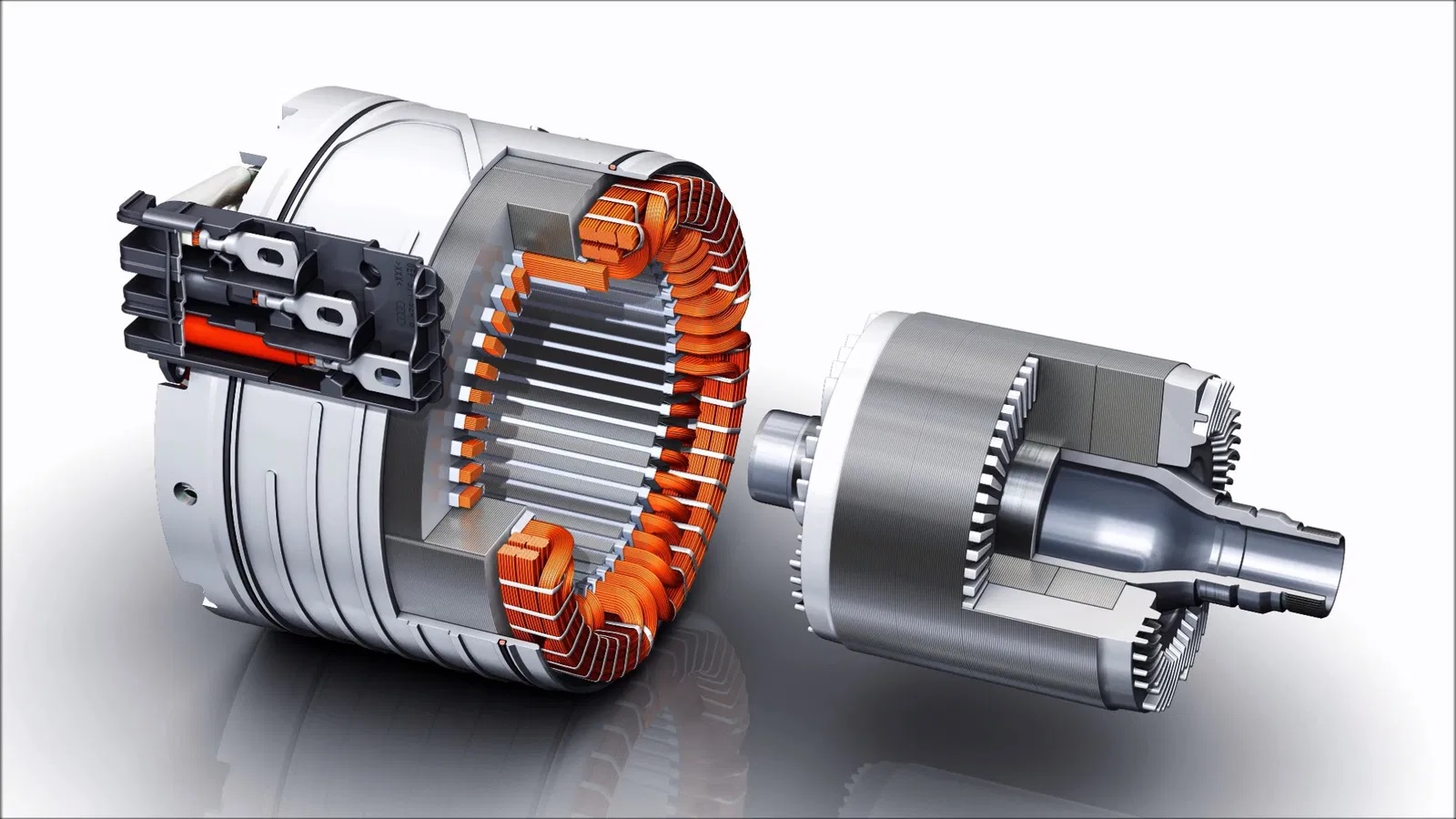
A comparison of 115 electric motors from 80 vehicles from China, Europe, and the United States: the most surprising differences
Are the electric motors in Chinese electric vehicles technologically different from those developed by European and American manufacturers? A study conducted by RWTH Aachen University in Germany analyzed 115 motors installed in 80 vehicles produced between 2019 and 2025. The study reached an interesting conclusion: the architectures of these motors are far more similar than one might expect. The most notable discrepancies lie in the choice of materials and certain aspects of the manufacturing process. According to the research findings, the power density of the latest electric motors has increased by approximately 45% since 2019.
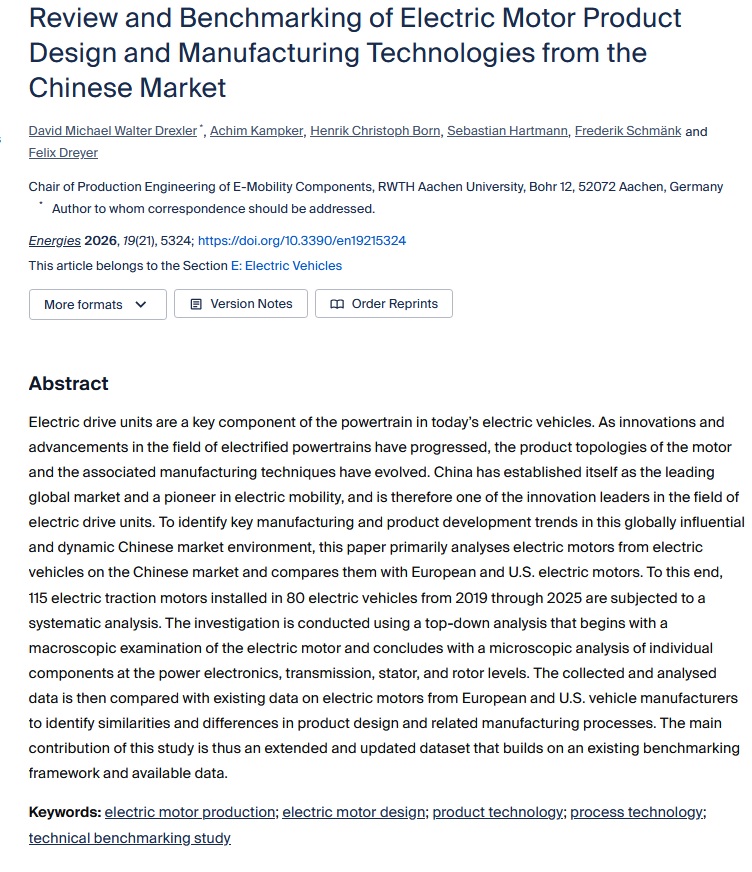
The research, prepared by the Department of Production Engineering for E-Mobility Components at RWTH Aachen University, was published in November in the scientific journal *Energies*.
The researchers conducted an exhaustive examination of various mechanical and electronic vehicle components, including the motor structure, rotor, stator, power electronics, transmission, and cooling systems.
Following this comprehensive investigation, it was concluded that there are no fundamental differences in the architecture of the electric motors from the Chinese, European, and American manufacturers included in the study.
Nevertheless, it is worth noting that there are differences in engineering choices. One of the most significant concerns the motor housings: while European manufacturers typically use aluminum, some Chinese automakers have opted for magnesium alloys. This material has the potential to reduce the weight of the housing by 20% to 30% compared to an equivalent aluminum housing.
However, its use presents challenges regarding manufacturing and corrosion resistance. However, China holds a significant advantage, as it accounts for more than 80% of global primary magnesium production.
Furthermore, discrepancies have been identified in internal electrical connections. Chinese manufacturers frequently use powder-coated busbars, whereas European manufacturers employ copper assemblies integrated into polymeric materials.
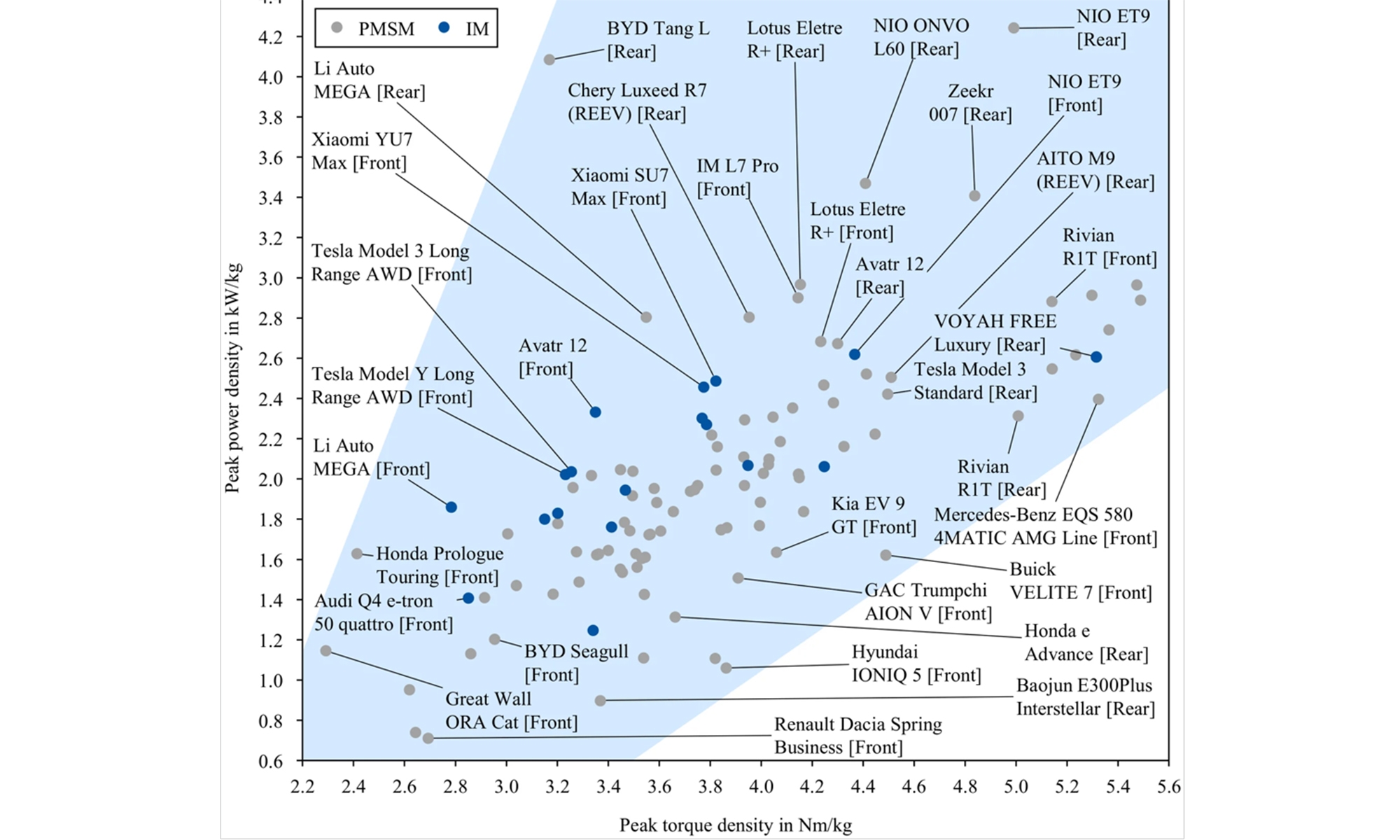
Modern electric motors offer 45% more power per kilogram.
The study also identifies a major technological evolution common to all markets. The peak power density of permanent-magnet synchronous motors has seen a notable increase, rising from an average of 1.68 kW/kg in 2019 to 2.43 kW/kg in 2024 and 2025 models.
This innovation represents an improvement of nearly 45%, enabling the development of more compact powertrains for a given power output.
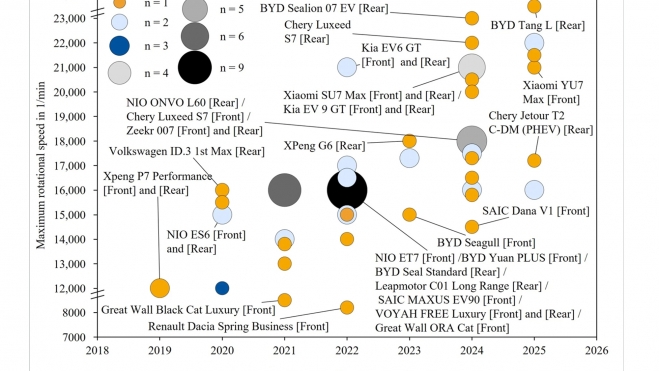
One of the keys to achieving this is an increase in rotational speed (RPM). Between 2020 and 2022, the motors examined typically operated at peak speeds ranging from 8,000 to 17,000 rpm. In contrast, more recent models frequently exceed 20,000 rpm, with some reaching as high as 30,500 rpm.
Operating at higher speeds allows for a reduction in certain dimensions, resulting in material savings. However, this requires specialized transmissions and precise vibration control.
China and Europe are moving toward more compact and better-cooled motors.
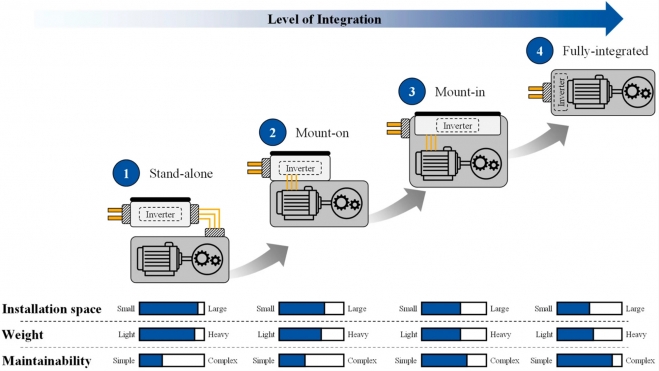
Another common trend is the integration of components. Since 2022, assemblies that combine the motor, transmission, and power electronics into compact units have become the standard among the vehicles examined. Furthermore, changes are being implemented in cooling systems. In contrast to conventional water-cooling techniques, manufacturers are increasingly adopting direct oil-cooling solutions to manage the temperature of the rotor and stator more efficiently. While these technologies allow for optimized thermal management, they also demand greater precision during the manufacturing process.
For the European industry, the study offers a significant conclusion: China is not following an entirely different technological path; rather, it competes by employing similar solutions while leveraging specific advantages in materials and industrial processes.
The research does not determine which country produces the highest-quality electric motors. Its most significant contribution lies in identifying the emerging technologies that are transforming these components—technologies that could influence their cost, size, and performance in the coming years.